
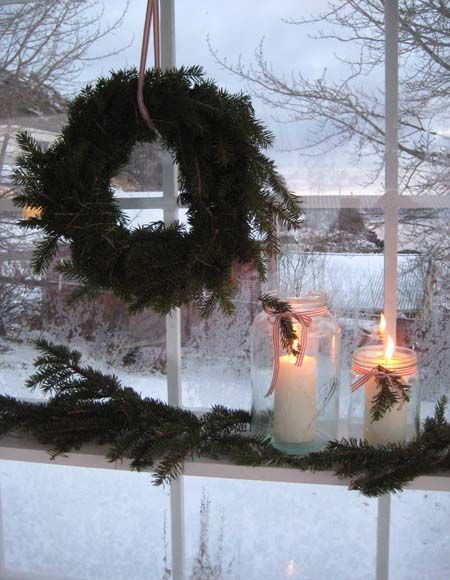
Since I welcomed the new year with two Barbara Crooker poems, it’s only fitting that I share another of her gems for my final Poetry Friday post of 2015. I can’t think of a more life affirming way to bookend this tumultuous year.
 “Making Strufoli” is included in Barbara’s most recent book, Selected Poems (Futurecycle Press, 2015), a striking collection of work first published in various chapbooks and periodicals. As Janet McCann points out in her insightful Foreword, Barbara writes about ordinary life through the lens of an extraordinary sensibility.
Though I have never made or eaten strufoli, I could certainly identify with the love-hate relationship we sometimes have with our parents and the mixed feelings which inevitably arise at year’s end, when everything comes to bear and so much is expected of us. Cooking can certainly be a form of meditation, a chance to feed our hungers for validation and understanding just as much as our need for physical sustenance.
*

MAKING STRUFOLI
(a traditional Italian sweet)
In the weeks before my father’s death, I make strufoli for him,
not knowing he will enter the hospital Christmas Eve,
not knowing he will never leave that high and narrow bed.
There are piles of presents yet to be wrapped red or green,
stacks of glossy cards to write, my work abandoned until the new year,
and I’m at the counter, kneading dough, heating olive oil until it spits.
A small blue flame of resentment burns. I’m in the last half
of my life. The poems I haven’t written are waiting
outside the snowy window. But I’m in the kitchen, rolling
dough into fat snakes, then thin pencils. With the sharpest
knife, I cut them into one inch bits—a slice for the prom dress
he refused to buy, the perfect one, in shell-pink satin;
a chop for the college education he didn’t save for—She’s just
a girl, She’ll get married, Who does she think she is?— a stab
for the slap when I tried to learn Italian from his mother,
my grandmother, whose recipe this is. The small pieces hiss
in the bubbling grease. They change into balls of gold. I drain
them on layers of paper towels. I don’t know I will never make
them again, never mix in the roasted almonds, pour warm honey
over the whole pile, sprinkle Hundreds of Thousands, those tiny
colored candies, over the top. I only know the way my shoulders
ache, the weariness as I do the great juggle—family, house, and
work—trying to keep all the balls in the air. And when his stubborn
breathing finally stops, when his heart gives out at last,
I only remember love as something simple and sweet,
a kiss of honey on the tongue. I take this strufoli that no one
else will eat, and spread it on the snow for the starlings and the crows.
~ posted by permission of the author. Copyright © 2015 Barbara Crooker. All rights reserved.
*
From the slicing and hissing of resentment to balls of gold, quite an emotional transformation!
I’m wondering why I never encountered strufoli before reading Barbara’s poem. My former neighbor told me about the “fried dough” she made every Christmas but I don’t recall her calling it ‘strufoli’, only that her family love loved it, and the holidays wouldn’t be the same without it. Are there any Italian grandmothers out there who’d like to adopt me? 🙂
So, strufoli (sometimes spelled with two “f”s), also known as Italian Honey Balls or “the croquembouche of southern Italy,” originated in Naples by way of the Greeks. Marble-size bits of dough are deep fried in oil, drenched in honey, then decorated with colorful hundreds-of-thousands/sprinkles/nonpareils. Candied fruit, nuts and lemon or orange rind are sometimes added. Strufoli are typically mounded into a pyramid or shaped into a wreath, making a beautiful, festive centerpiece for the holiday table. This sweet indulgence, also part of Easter celebrations, symbolizes abundance and good luck. Some think the honey keeps families “stuck” together.
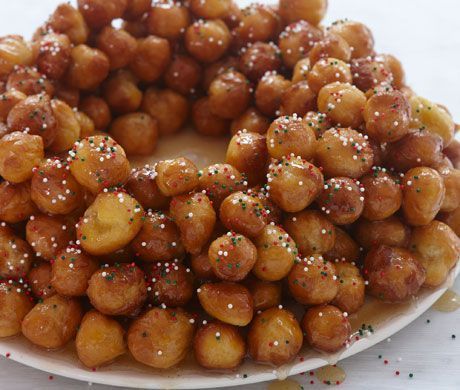
Barbara was kind enough to dig up her grandmother’s recipe just for us and shared these words about her poem and making strufoli:
My memory of making them is somewhat dim, but I believe my grandmother taught my mother, and she taught me. As my parents aged, my mother wasn’t up for doing this any more (frying is quite a production, including clean-up), so I’d make it to have on hand when they came for their Christmas visit.
My dad was a difficult man, who grew up conflicted in an immigrant family, and who distanced himself from his culture. Around the time I was in college, he reconnected with family and heritage, so I’m grateful to have had those years of visits and those stories. He also grew up in a culture that didn’t value women; he couldn’t understand why being a wife and a mother wasn’t enough. And yet he was proud of my writing, and I think his love of gardening and love of food have been a great legacy, and an important part of my life. He’s been gone around twenty years; Mom’s been gone seven, and I miss them both, especially around the holidays.
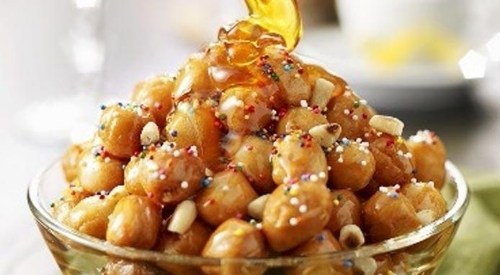
ANNUNCIATA (EMMA) CUCCARO POTI’S STRUFOLI RECIPE
- 2-1/2 cups flour
- 1/4 teaspoon salt
- 1/2 tablespoon confectionary sugar
- 3 eggs
- 2 egg yolks
- 1/4 cup margarine
- 1 teaspoon grated lemon peel
- 2 cups olive oil (regular, not EVOO)
- 1 cup honey (hers calls for 1-1/2 cups, but I found that to be too much)
- whole almonds
- 1/3 cup multi-colored candies (if you can find them)
On a floured pastry board, heap the flour in a mound and make a well in the center, into which put the salt, sugar, eggs, egg yolks, oleo, and lemon peel. Mix, then knead by hand.
Lightly roll 1/4” thick, then cut into strips 1/4” wide. Roll with the palm of your hand to form shapes the size of a pencil (think Play-Doh “snakes”). Cut into 1/4” pieces.
Fry in hot oil 3-5 minutes until lightly browned. Drain and dry on paper towels. Heat honey on low for 15 minutes. Pour into a large bowl, add fried pastry bits, whole almonds, toss, and let soak for five minutes (this part is mine). Scrape into a mound, and decorate with candy sprinkles. Have lots of Wet Wipes handy if giving to small children!
*
Check out this struffoli-making video from the Academia Barilla to see kneading, rolling, cutting and frying techniques:
https://www.youtube.com/watch?v=dGEUzvMe3Kg
* * *
 The clever and delightful Diane Mayr is hosting the Roundup at Random Noodling. Click through to check out out the full menu of poetic goodness on this week’s menu. Only 6 more days till Christmas!!
*
 This post is also being linked to Beth Fish Read’s Weekend Cooking, where all are invited to share their food related posts. Put on your Santa caps and holiday aprons, and come join the fun!
——————————————–
Copyright © 2015 Jama Rattigan of Jama’s Alphabet Soup. All rights reserved.

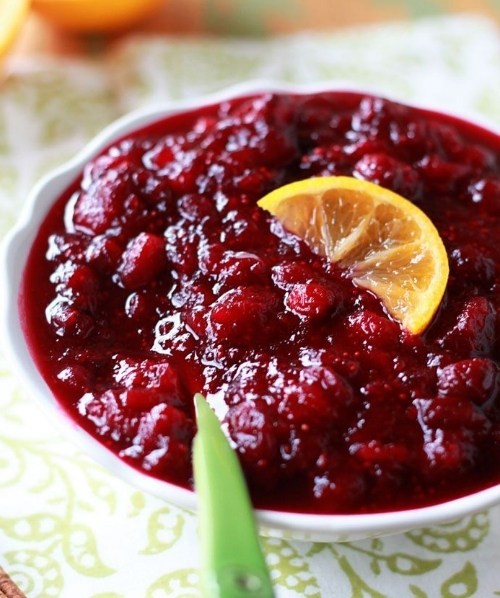


 Wrap your lips around some Thanksgiving Succotash while reading about the arrival of the Pilgrims and how the Wampanoag people taught them to hunt and grow food in the New World. Sweeten your understanding of the thirteen original colonies while getting down with some Colonial Cherry-Berry Grunt. Nosh on Lost Bread while considering what was behind the French and Indian War.


 Jama's Alphabet Soup