[review + yummy cake recipe] Saving the Countryside: The Story of Beatrix Potter and Peter Rabbit by Linda E. Marshall and Ilaria Urbinati


Once upon another time, I was lucky enough to visit England’s glorious Lake District, where vistas of pristine lakes, rolling green pastures dotted with sheep, lush vales, charming stone cottages, miles of slate and dry stone walls bordering fertile farmland, and magnificent fells rising in the distance took my breath away.

I was curious to see the area after learning that England’s greatest poets and writers had flocked there for three centuries. Though studying the Romantic poets in college had stirred my wanderlust (my “friends” Wordsworth, Shelley, Keats, Coleridge, Blake, and Byron enabled me to envision this paradise on earth), it wasn’t until I fully tuned into Beatrix Potter’s connection with Lakeland that I became totally smitten. Visiting Hill Top Farm made me a forever diehard fan.


Hill Top Farm, Near Sawrey


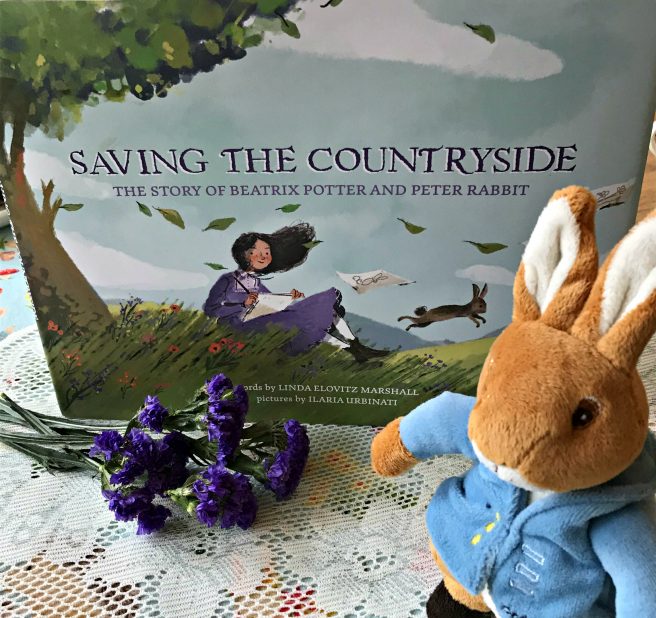
Beatrix didn’t just love the countryside, she helped preserve it for future generations. And she established this amazing legacy at a time when it was not proper for women to “travel, attend college, or work.” Her groundbreaking accomplishments are highlighted in this wonderful new picture book, Saving the Countryside: The Story of Beatrix Potter and Peter Rabbit, by Linda Elovitz Marshall and Ilaria Urbinati (little bee books, 2020).

Young readers will find it interesting that in addition to writing the beloved Peter Rabbit books, Beatrix was also a natural scientist, savvy businesswoman, sheep farmer, and ardent conservationist.

Continue reading

lettuce celebrate easter with beatrix potter’s flopsy bunnies (+ 2 recipes!)

Spring is finally here and Easter’s coming up this weekend — which means it’s time for a little Beatrix Potter!

Always fun to reread her little Peter Rabbit books and play with the Beswick porcelain figurines that wait patiently all year in the butler’s pantry cupboard. Take us out, they say. Dust us off and take our picture!

Who will be in the spotlight this time?

Hmmmm. Last year we wrote about The Tale of Peter Rabbit and Canon Hardwicke Rawnsley. Most everyone knows Peter’s story and its sequel featuring Peter’s cousin Benjamin Bunny, who returns with him to Mr. McGregor’s garden to get Peter’s clothes back.

Potter followed that adventure with The Tale of the Flopsy Bunnies (1909), that’s about Benjamin and Peter all grown up. Benjamin is now married to Peter’s sister Flopsy and they have six children “generally called the ‘Flopsy Bunnies.'” We soon learn that lettuce will play a key role in this story. 🙂

It is said that the effect of eating too much lettuce is ‘soporific.’

I have never felt sleepy after eating lettuces; but then I am not a rabbit.

They certainly had a very soporific effect upon the Flopsy Bunnies!

Continue reading

a little tale of beatrix potter and canon hardwicke rawnsley (+ a recipe for Lakeland Lemon Bread)


Once upon a time there were four little Rabbits —
and their names were Flopsy, Mopsy, Cotton-tail and Peter.

They lived with their Mother in a sand-bank, underneath the root of a very big fir-tree.

‘Now my dears,’ said old Mrs. Rabbit one morning, ‘you may go into the fields or down the lane, but don’t go into Mr. McGregor’s garden: your Father had an accident there; he was put in a pie by Mrs. McGregor.’

So begins the story of Peter Rabbit, the most beloved bunny in children’s literature. It’s likely this charming tale will be enjoyed during family Easter celebrations on both sides of the pond this weekend.

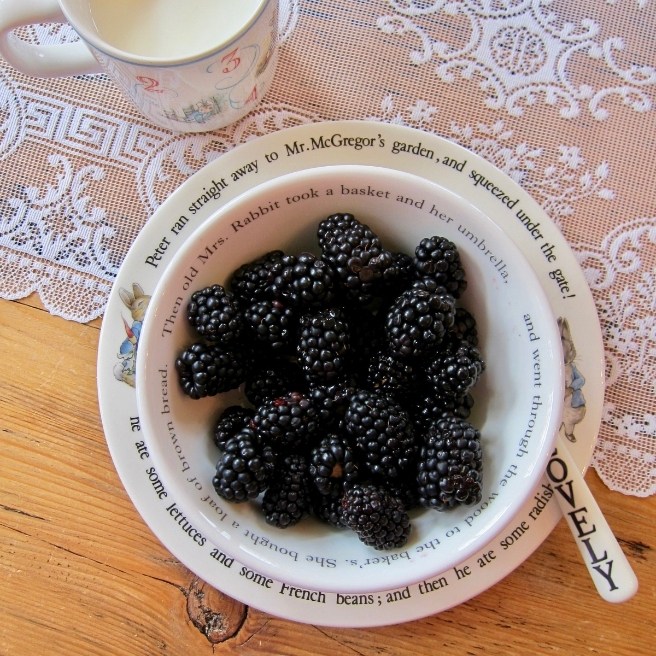
Refreshments may include blackberries and milk, currant buns, lettuces, radishes, parsley and camomile tea. Other favorite Potter characters such as Benjamin Bunny, Tom Kitten, Jemima Puddle-duck, and Mrs. Tiggy-winkle may also get their fair share of attention, but what about Canon Hardwicke Rawnsley?

Who?

Well, it’s time you knew (if you don’t already). 🙂

Rawnsley wrote the “other” Tale of Peter Rabbit. Yes, there actually was another version. And it was written in verse!

Continue reading

[catTEA review] The Tale of Kitty-in-Boots by Beatrix Potter and Quentin Blake

Holy catnip!

It’s a big day for Beatrix Potter fans: The Tale of Kitty-in-Boots is officially out in the world (UK release September 1, U.S. release September 6)!

Ever since we first heard tell of this book back in January, all of us here in the Alphabet Soup kitchen have been counting down the days, hours, and minutes to this much anticipated event.

After all, it’s not every day that a long lost manuscript written over 100 years ago by such a beloved author is rediscovered and brought to life with brand new illustrations by celebrated illustrator Quentin Blake.

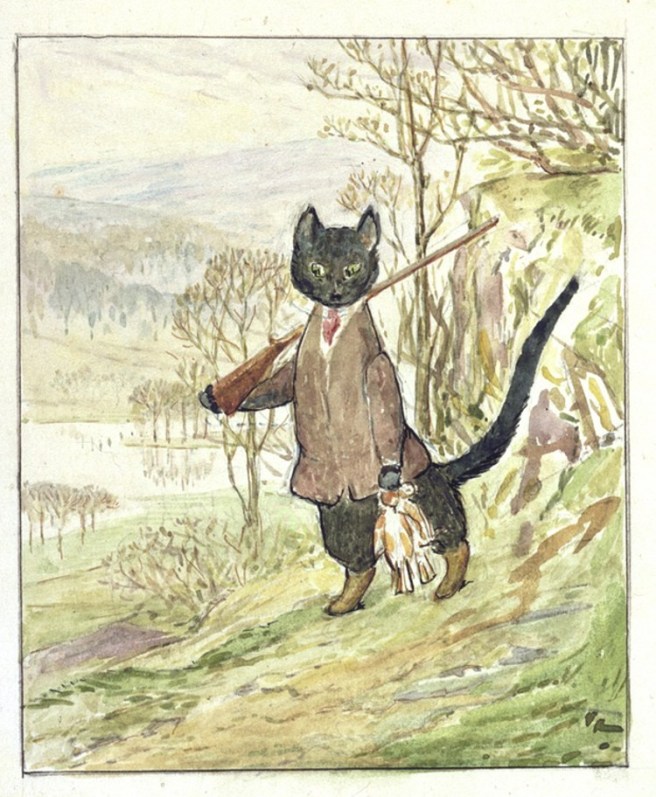
Potter wrote The Tale of Kitty-in-Boots in 1914, but had not finished illustrating it. Two years ago, editor and publisher Jo Hanks stumbled upon a reference to Kitty’s story in a letter from Beatrix to her publisher in an out-of-print collection of her writings. In the Warne archive at the Victoria & Albert Museum, Hanks found three Kitty-in-Boots manuscripts — two handwritten in children’s school notebooks and one typeset in dummy form — along with a colored sketch of Kitty and a pencil rough of foxy arch-villain Mr. Tod.

Supposedly Potter’s only finished illustration for the book, intended as the frontispiece. Courtesy Frederick Warne & Co./V&A.

Continue reading

beatrix part two: of guinea pigs, nursery rhymes and cupcakes

Today we are honored to welcome a very special guest to Alphabet Soup: the one and only Amiable Guinea-pig!

After reading and reviewing Beatrix Potter and the Unfortunate Tale of a Borrowed Guinea Pig by Deborah Hopkinson and Charlotte Voake (Schwartz & Wade, 2016), we felt a tasty homage to this dapper little fellow was definitely in order.

Peter Rabbit gets a lot of attention, as does Miss Tiggy-Winkle, Jemima Puddle-Duck, Jeremy Fisher, Tom Kitten and Squirrel Nutkin. In fact, they all have their own little books written about them. But not the Amiable one, who was actually the first guinea pig in Miss Potter’s work. She wrote a clever limerick about him that appeared in Appley Dapply’s Nursery Rhymes (1917).

But one limerick does not a book make. Wouldn’t you feel a little slighted? To add insult to injury, initially Miss Potter’s publisher Frederick Warne & Co. wasn’t that keen on the Appley Dapply rhyme collection, which she had hoped to publish following the release of The Tale of Peter Rabbit in 1902.

Continue reading