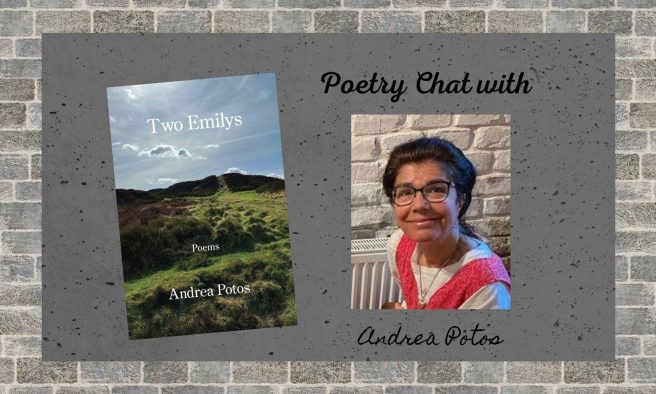
[chat + recipe + giveaway] Andrea Potos on Two Emilys

We’re happy to welcome Wisconsin poet Andrea Potos back to talk about her recently published chapbook, Two Emilys (Kelsay Books, 2025).

As you may have guessed, the “Emilys” in question are revered literary icons Emily Brontë and Emily Dickinson, contemporaries from opposite sides of the Atlantic who continue to mystify us with their creative genius. Though one was British and the other American, their lives had interesting parallels.
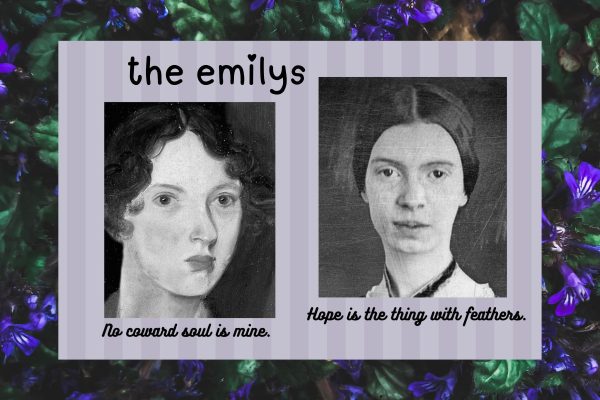
Both were unmarried and largely reclusive. They cherished home as sanctuary, wrote on scraps of paper while cooking and baking, were known for their bread recipes. The Emilys were religious skeptics living within religious families, and fascinatingly enough, they were ultimately Victorian badass writers “masquerading” as domestic spinsters, sublimating their passions and unfulfilled desires into art.

In Two Emilys, we travel with Potos to Haworth and Amherst via evocation, dream, memory, and imagination. She addresses her muses with awe and reverence, while acknowledging a unique kinship as fellow wanderer, keen observer, lover of beauty, and sister poet dedicated to her craft.
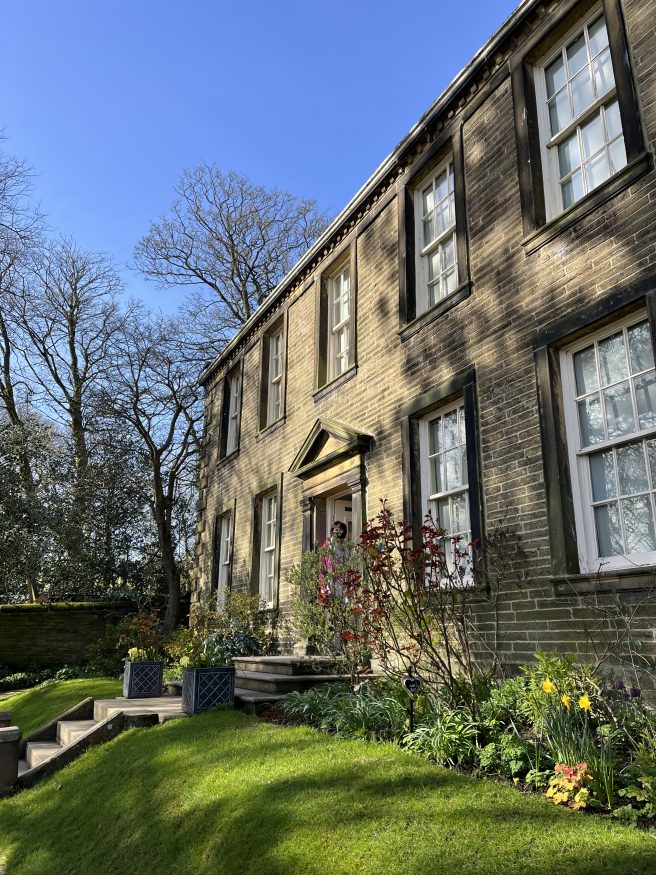
Andrea at the Brontë Parsonage, Haworth.

These poems are sheer loveliness to read with moments ethereal, delicate, sometimes humorous, warmed by genuine admiration. We thank Andrea for dropping by to tell us more about the book and for sharing all the wonderful photos + a delicious recipe. 🙂

*

Continue reading
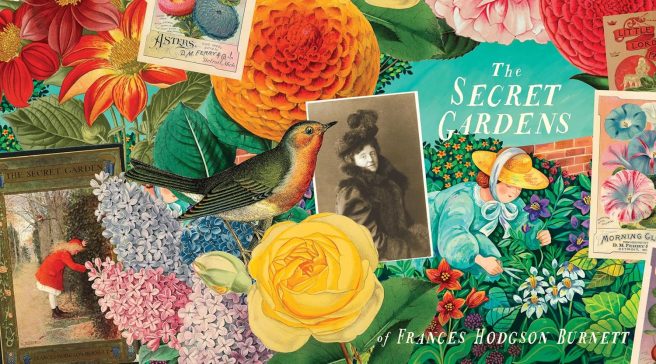
[review + recipe] The Secret Gardens of Frances Hodgson Burnett by Angelica Shirley Carpenter and Helena Pérez García

“As long as one has a garden one has a future; and as long as one has a future one is alive.” ~ Frances Hodgson Burnett

Since The Secret Garden has always been one of my favorite children’s books, I was especially excited to see Angelica Shirley Carpenter and Helena Pérez García’s recent picture book biography about Frances Hodgson Burnett.

Learning how Burnett coped with hardship and adversity in her own life shed new light on my appreciation of the novel. Now I understand why gardens were so important to her, not only as places of beauty and inspiration, but of comfort and healing. I also found it intriguing that she had a luxurious lifestyle that was shocking by Victorian standards (a twice divorced smoker who spent time away from her children). 🙂

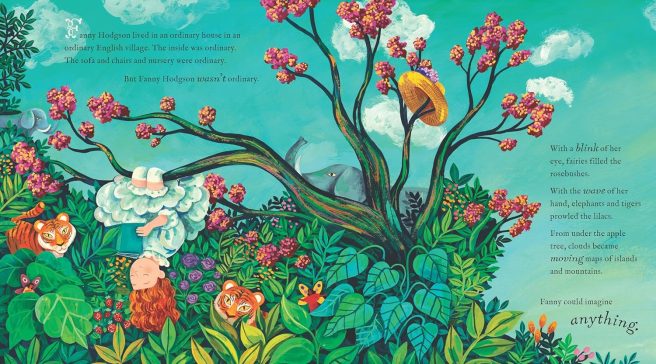
We first meet Fanny Hodgson as a girl who lived in “an ordinary house in an ordinary English village.” But Fanny herself was anything but ordinary because of her vivid imagination. In her world, “fairies filled the rosebushes” and “elephants and tigers prowled the lilacs.”

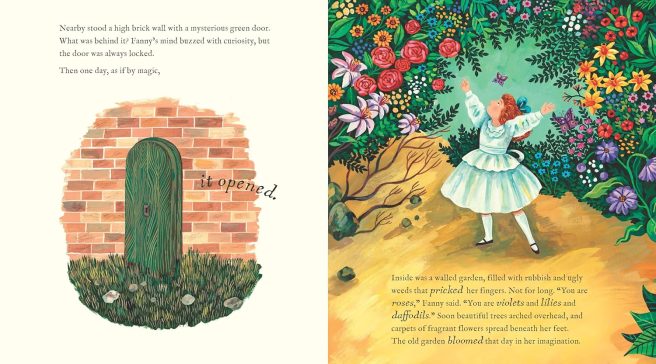
Her idyllic existence was upended when her father died (she was around six), and her family was forced to move to Manchester so her mother could run his store. The dull and grey city was a stark contrast to the beloved garden she’d left behind, but Fanny’s imagination sustained her, as she envisioned roses, violets, lilies and daffodils abloom in an old abandoned garden actually “filled with rubbish and ugly weeds.”

After a few years, her mother had to sell the store as businesses in Manchester failed. Short on money, Fanny’s family then relocated to a small village in Tennessee at the suggestion of her uncle, who thought her brothers could find work there. Unfortunately, they weren’t able to earn as much money as they’d hoped, so sometimes the family went hungry. Fifteen-year-old Fanny wanted to help, but there were no jobs for girls.

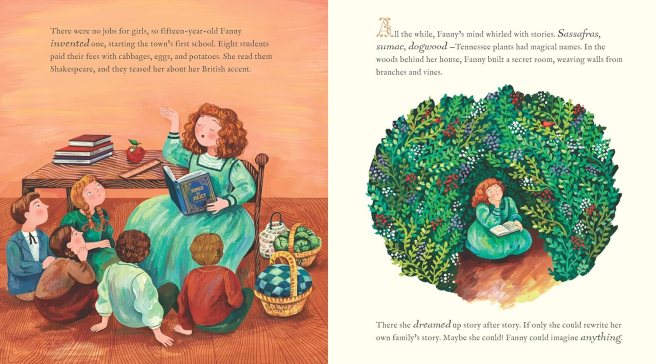
Undeterred, she put her imagination to work once again and invented her own job, opening the town’s first school. Her eight students paid with “cabbages, eggs, and potatoes,” and she read them Shakespeare. She also built a “secret room” in the woods behind her house, “weaving walls from branches and vines.”

There, in her cozy sanctuary, she dreamed up stories. She knew that magazines paid for stories; could she sell one of hers? She earned money for writing supplies by picking and selling wild grapes at the market. She wrote a love story and sent it out — and to her surprise, sold it for thirty-five dollars — enough to feed her family for weeks!

Continue reading

[review + recipes] V&A Introduces: Beatrix Potter by Katie Woolley and Ginnie Hsu

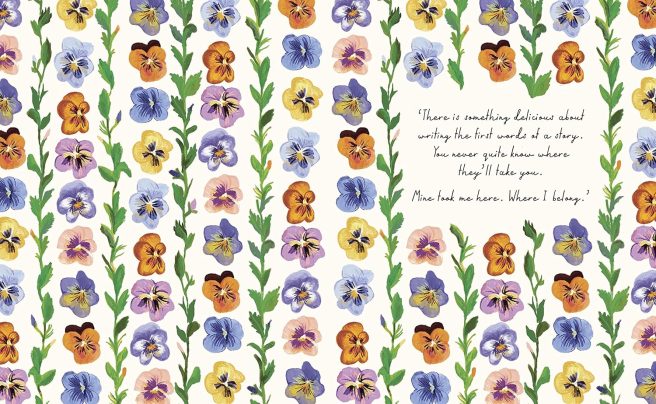
“There is something delicious about writing the first words of a story. You never quite know where they’ll take you. Mine took me here. Where I belong.” ~ Beatrix Potter

Spring is Beatrix Potter time.

Every year as Easter rolls around, I enjoy rereading some of her Peter Rabbit tales and looking for new Potter-related books to add to my growing collection. Happily, there’s always more to learn about this remarkable woman, the world she created via her imagination, and the beautiful countryside she worked so hard to preserve for future generations.

Recently I stumbled upon a charming mini book, the latest title in the popular “V&A Introduces” series that celebrates icons in the world of art and design in collaboration with the Victoria and Albert Museum in London.

Love the pansies endpaper!

Beatrix Potter: Artist, Conservationist, Pioneer by Katie Woolley and Ginnie Hsu (Puffins Books, 2022), is a beautifully illustrated introduction to Potter’s life and accomplishments that includes original photographs and fascinating backstories to several of her most beloved tales.

Carefully curated facts are presented in twelve sections, giving readers a good sense of how unique Beatrix was as a fully self-realized creative who defied societal convention and attained financial independence:

  • Young Beatrice
  • Writing and Drawing
  • Escape to the Country
  • The Tale of Peter Rabbit
  • The Lake District
  • The Tailor of Gloucester
  • The Businesswoman
  • Hill Top Farm
  • Love & Marriage
  • The National Trust
  • Country Living
  • A Lasting Legacy

Peter Rabbit fans will enjoy learning how Beatrix became a master storyteller. As was typical for a girl from a wealthy Victorian family, she was looked after by a nanny and had lessons with a governess. She inherited a love of art from her parents, got lost in stories, and practiced drawing characters from the books she read.

Continue reading

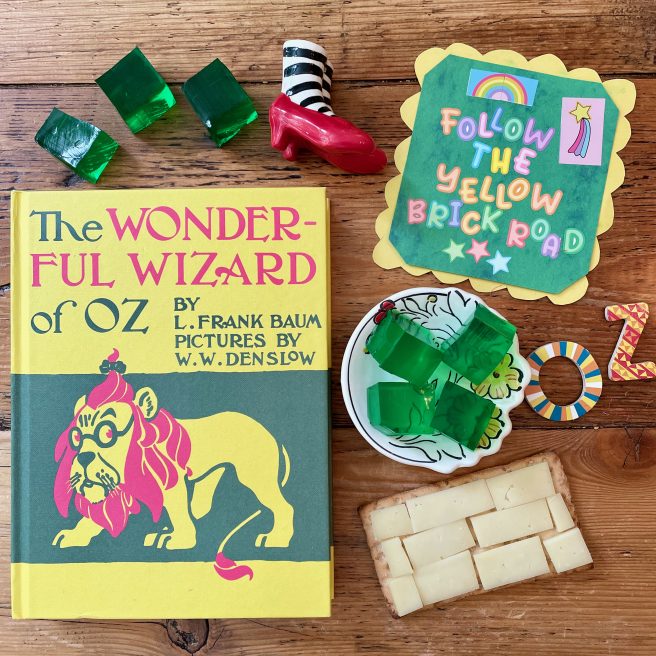
[musings + recipes] two yummy wizard of oz treats

“A heart is shown not by how much you love, but by how much you are loved by others.” — The Wizard of Oz

Oh, we’re off to see the Wizard — the wonderful Wizard of Oz!

Hello, my pretties! Let’s fly over the rainbow and spend some time with Dorothy, Toto, Scarecrow, Tin Man, Cowardly Lion, adorable munchkins, a green witch, flying monkeys, ruby slippers, a yellow brick road and a dazzling Emerald City!

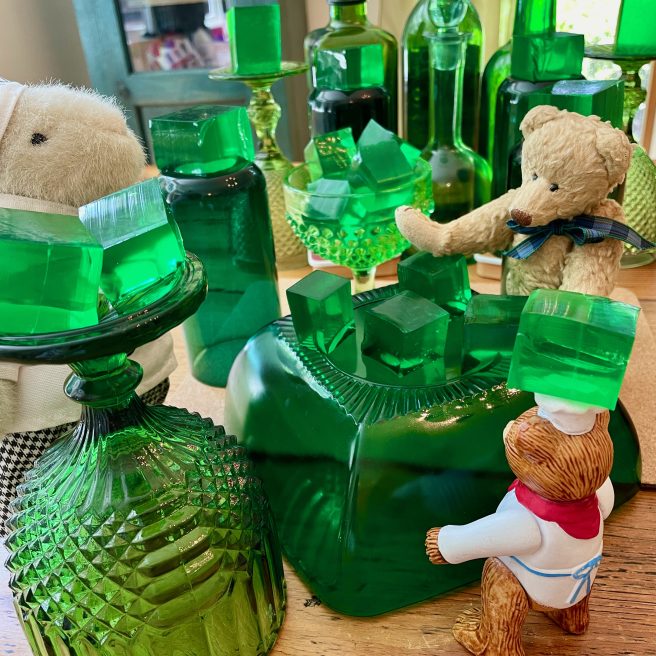
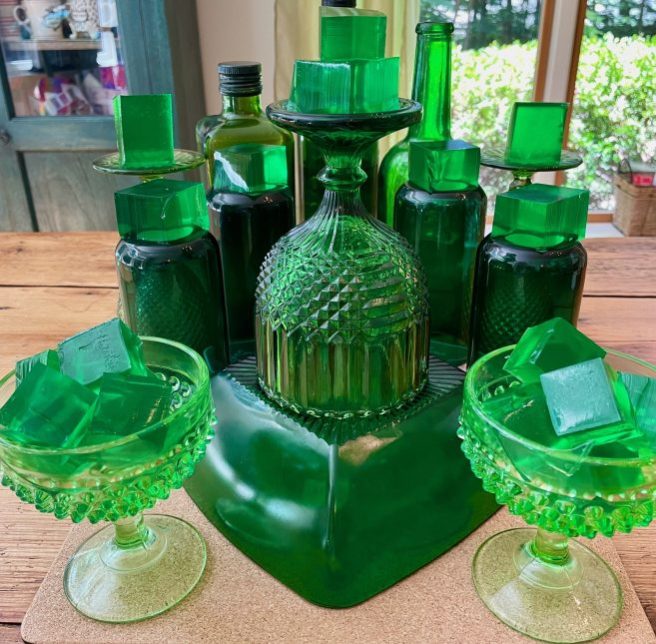
Alphabet Soup munchkins construct their own Emerald City.

If the enduring popularity of this beloved American fairy tale has taught us anything at all, it’s that no matter how much things may change, deep down we’ll always yearn for a place where the dreams we dare to dream really do come true. 🙂

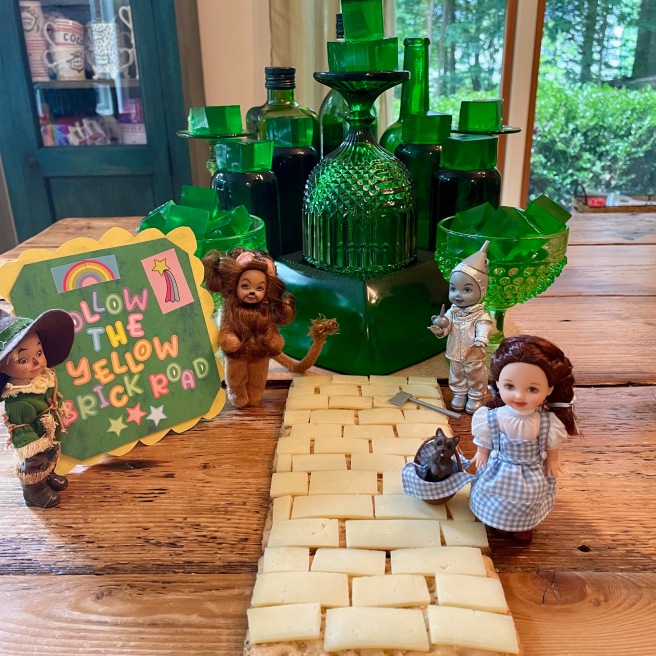
Follow the cheddar brick road.

I’ve been on a “Wizard of Oz” kick lately — rewatched the movie and reread the book a couple of times, read several L. Frank Baum biographies, even scored two cute Wizard of Oz cookbooks — one inspired by the iconic 1939 film starring Judy Garland, the other based on Baum’s The Wonderful Wizard of Oz, first published in 1900 with illustrations by W.W. Denslow. It was fun to revisit this timeless classic via the lens of food, and to note how the movie differs from the book.

Continue reading

[poem and recipe] orange you glad it’s friday?

“Orange is the happiest color.” ~ Frank Sinatra

Warm, cheerful and uplifting, the color orange combines the passion of red with the positivity of yellow. Ever vibrant, orange inspires creativity, boosts energy and stimulates the appetite.

California-based poet Lori Levy once said that poets paint in words. I love how she’s embraced her orange palette to create the vivid images in today’s delightful poem.

*

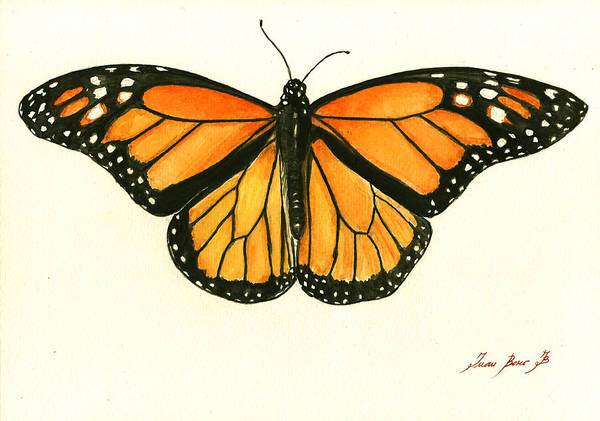
“Monarch Butterfly” by Juan Bosco.
IN THE MOOD FOR ORANGE
by Lori Levy

I want to discover what's orange in the world:
to come upon a leopard lily;
flame lichen clinging to a rock.
A barn swallow's chest, a monarch's wing,
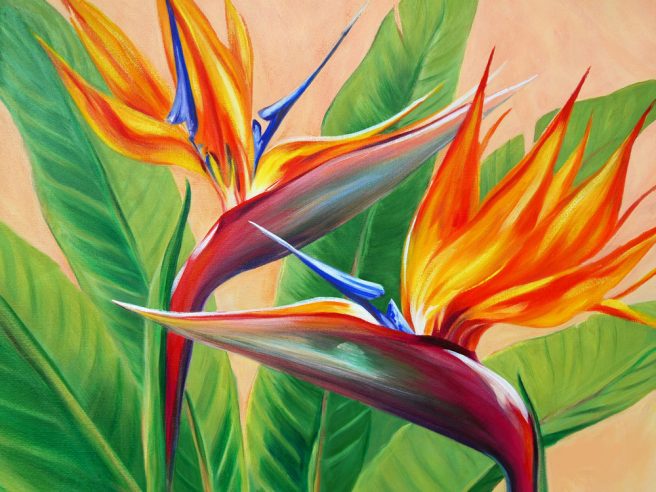
Or just a bird-of-paradise against the sky.

I could slice a mango or suck on a section
of tangerine. Make soup for lunch
with pumpkin, squash, carrots, yams.
Could settle down by a fire, copper and blue,
or by the orange glow of a glass lamp.

What I have in mind is a fat ripe sun
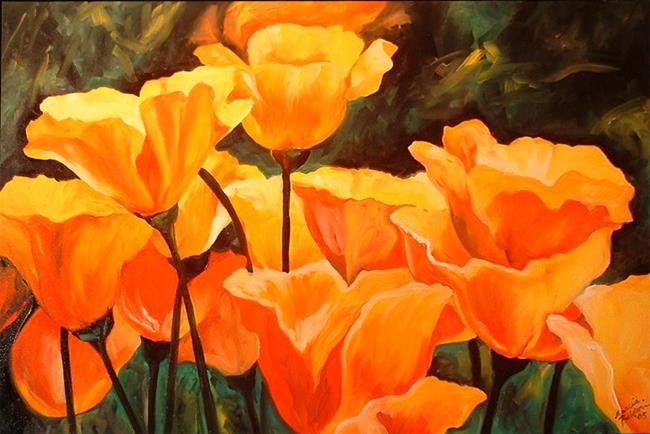
the scarlet of a California poppy --
and me in an ocher-orange dress,
lips painted mandarin, twirling
to the rattle of Mexican maracas

until I drop like the sun
and the world grows dark again.

~ from In the Mood for Orange (Gvanim, 2007)
“California Poppies” by Marcia Baldwin.

*

“Tropical Flirtation” by Carol Collette.

Revel in it!

Continue reading