Kenneth Koch: “Permanently” smitten


“Write poetry as if you were in love. If you are always in love you will not always write the same poem, but if you are never in love you may.” ~ Kenneth Koch
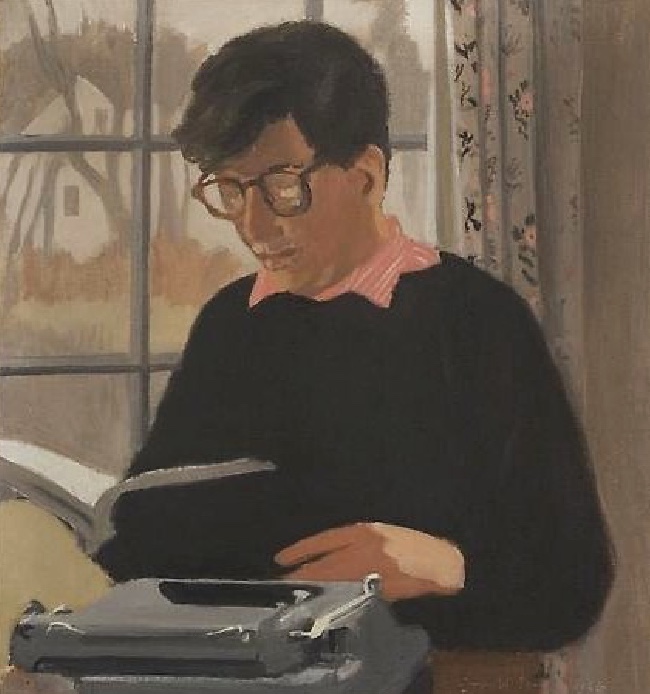
“Kenneth Koch Reading” by Fairfield Porter (1966)

Happy June! Here’s a little Kenneth Koch to nudge your nouns and activate your adjectives.

*

PERMANENTLY
by Kenneth Koch

One day the Nouns were clustered in the street.
An Adjective walked by, with her dark beauty.
The Nouns were struck, moved, changed.
The next day a Verb drove up, and created the Sentence.

Each Sentence says one thing -- for example,
“Although it was a dark rainy day when the Adjective walked by, I shall remember the pure and sweet expression on her face until the day I perish from the green, effective earth.”
Or, “Will you please close the window, Andrew?”
Or, for example, “Thank you, the pink pot of flowers on the window sill has changed color recently to a light yellow, due to the heat from the boiler factory which exists nearby.”

In the springtime the Sentences and the Nouns lay silently on the grass.
A lonely Conjunction here and there would call, “And! But!”
But the Adjective did not emerge.

As the adjective is lost in the sentence,
So I am lost in your eyes, ears, nose, and throat --
You have enchanted me with a single kiss
Which can never be undone
Until the destruction of language.

~ from Selected Poems, 1950-1982 (Vintage, 1985)

“Window” by Jane Freilicher (2011)

Charming, conversational, lighthearted, with quite a surprise at the end. Did you realize this was a love poem when you first started reading it? Love Koch’s disarming approach. 🙂

Perhaps, like me, you were delighted with how he cleverly personified the parts of speech, immediately drawing us in at the beginning with characters we’re more accustomed to diagramming than dallying with.

Continue reading
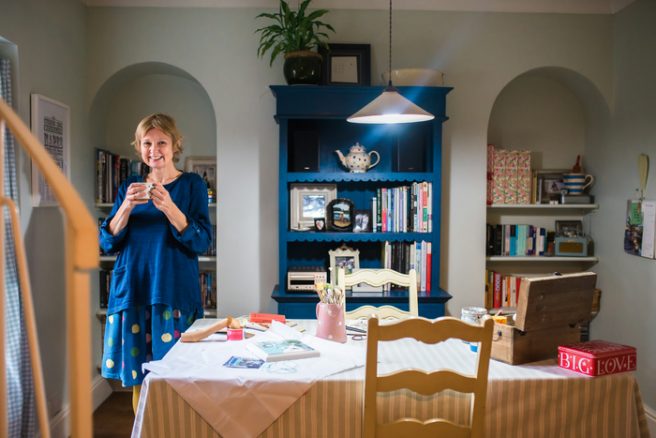
Mani Parkes: feel the joy

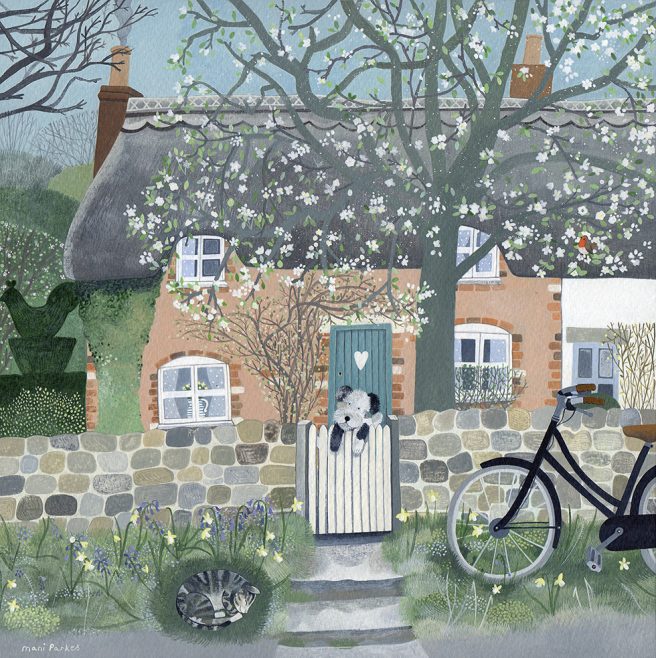
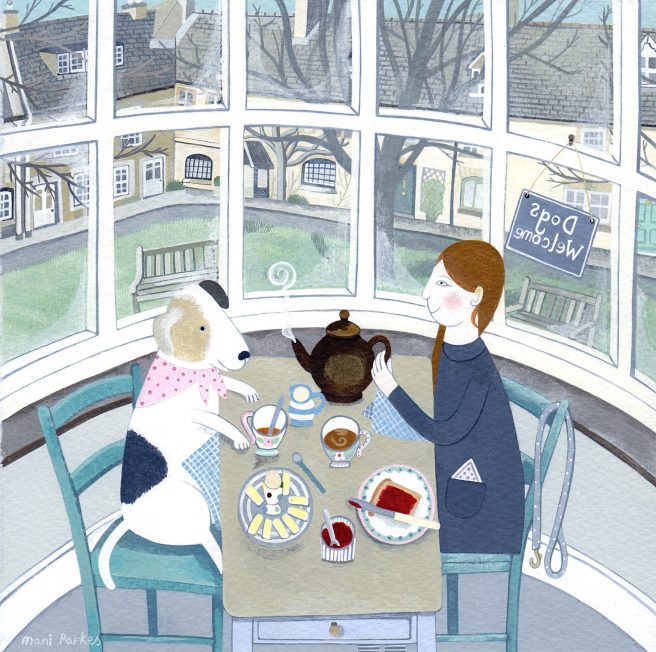
What could be better than sitting down for a nice brekkie with your best furry friend? 

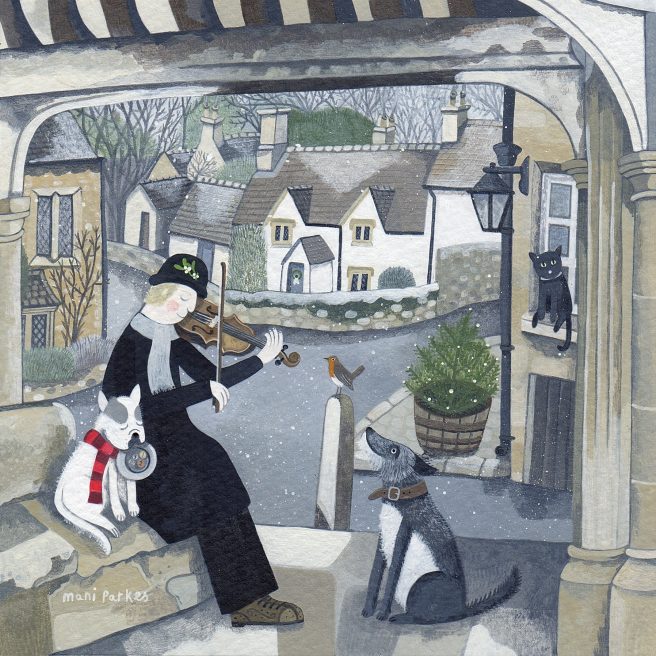
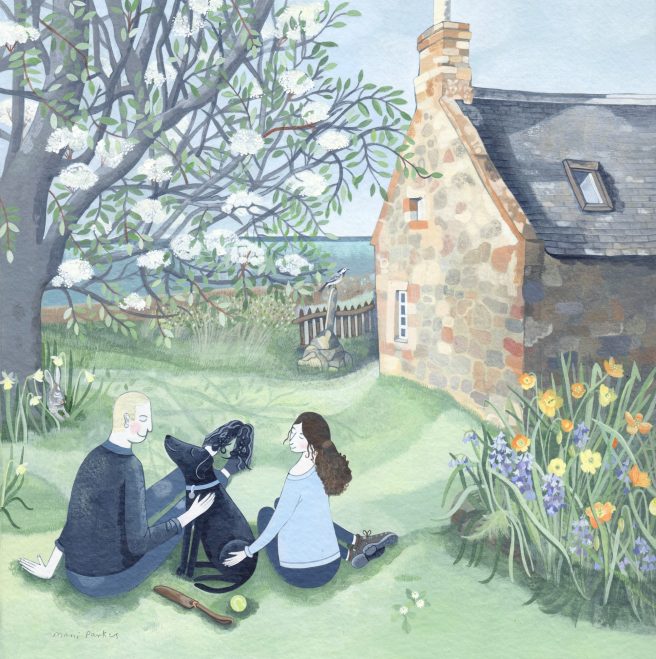
For me, Mani Parke’s art was love at first bark. Her pictures make me happy — and no wonder, they check all the right boxes: lots of British charm, quaint buildings nestled in villages with narrow, winding streets; restful coastal views, congenial tea drinking, people relaxing and being neighborly, couples (young and old) in love sweet love, adorable dogs (napping, cuddling, snuffling), not to mention all the beautiful BLUES! *sigh*

Her palette is subdued, chalky, refreshing and calming. She incorporates shades of grey, sometimes green, surprising the viewer with an occasional pop of red or pink. The predominance of blue + dogs reminded me of Gary Bunt, but with a decidedly softer, more feminine and detailed touch.

Continue reading
Maud Lewis: Painting Joy

The happy childlike paintings of Canadian folk artist Maud Lewis belie the many adversities and challenges she faced throughout her life.

Maud Lewis in her Marshalltown home.

Looking at her peaceful scenes of winding country lanes, sleepy boat harbors, and charming cats amongst tulips and blossom-laden branches, it’s hard to imagine she lived most of her life in a cramped one-room house with no running water or electricity, barely able to hold a paint brush with her gnarly, arthritic hands.

Born in Yarmouth, Nova Scotia in 1901, Maud Dowley was a solitary child, uncomfortable around others because of her differences. She was smaller than most, and because of birth defects, had hunched shoulders, almost no chin, and painfully deformed hands. Juvenile rheumatoid arthritis further reduced her mobility. Teased mercilessly by the other kids, she dropped out of school at age 14.

Continue reading

possessed by jaye schlesinger’s paintings

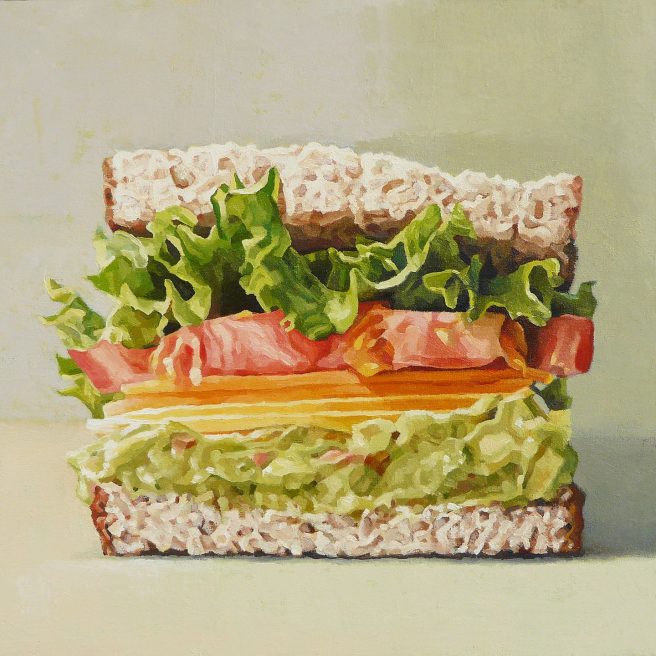
Go ahead, take a bite. You know you want to.

As soon as I spotted this sandwich created by Michigan artist Jaye Schlesinger I was a goner.

Those of you who nosh here regularly know I have a penchant for photorealistic paintings. Especially of food. It’s a good calorie-free, guilt-free way to indulge (my eyes are always happy to do the chewing). 🙂

What’s interesting about Jaye’s formal training is that she holds MFA’s in both Painting and Medical Illustration (both from the University of Michigan, Ann Arbor). When I read that she worked as a medical illustrator for fifteen years, producing art for textbooks and journal articles, I thought, aha! — that accounts for her precision.

Continue reading

leaves you wanting Moore

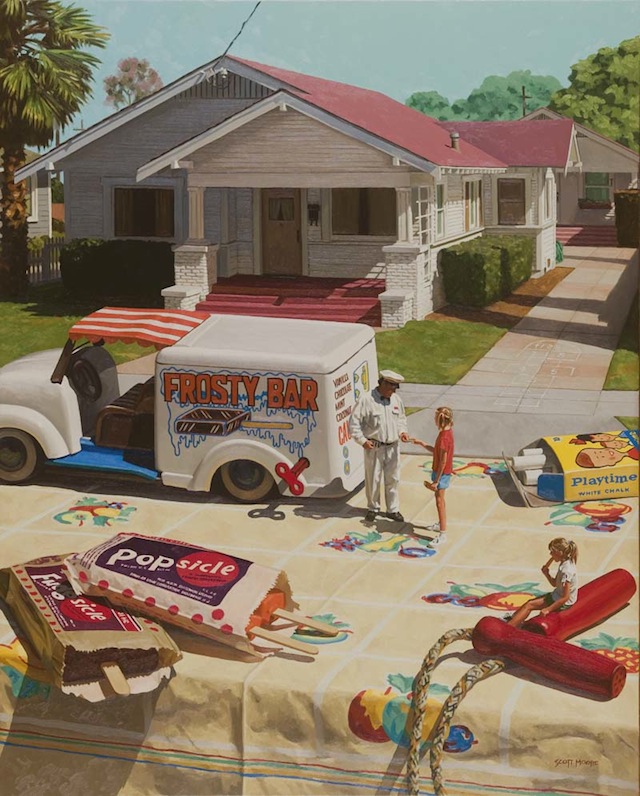
“Ice Cream Man”

When Scott Moore was just six years old, he drew a policeman on a horse arresting a six foot tall intoxicated duck. A sign of things to come? 🙂

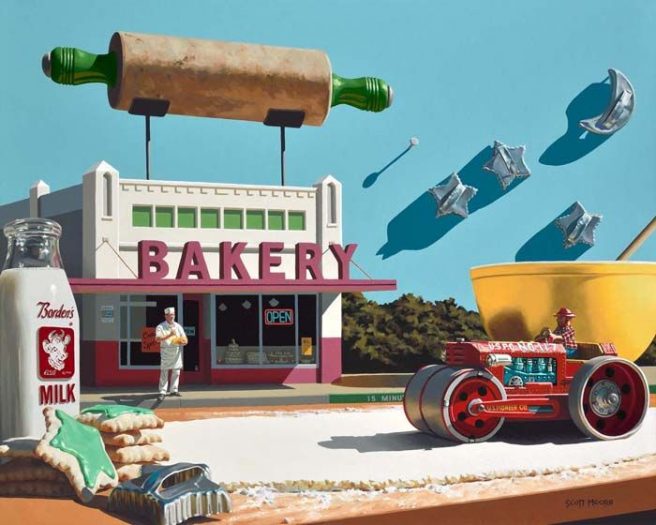
Well, Scott didn’t grow up to be a policeman, and as far as I know, doesn’t regularly cavort with quazy quackers, but he is a master of surrealism, or of what he calls, “out-of-scale realism.”

“Milk and Cookies”

A 40-year resident of Laguna Beach, California, Scott painted traditional watercolors before making an international name for himself in recent decades with his photorealistic, fantastical pieces. 

“Toastmaster”

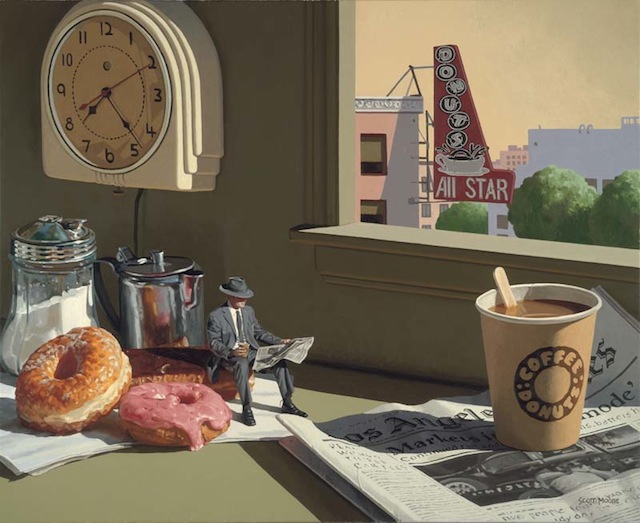
He typically uses two scales in the same painting, placing tiny figures in retro scenes to tell stories inspired by childhood memories, dreams, and his boundless imagination.

He creates these works in a 1,000-foot studio which he built by excavating a second floor beneath his home. He likes having his studio, which resembles an antique store, on a different level. What a cool collection of 50’s and 60’s tin toys, old books, kitchen and household memorabilia! What fun it must be to “shop your own shelves” for a clock radio, milk bottle, cookie jar, or coffee can to add to your pictures.

“Sell Phones”
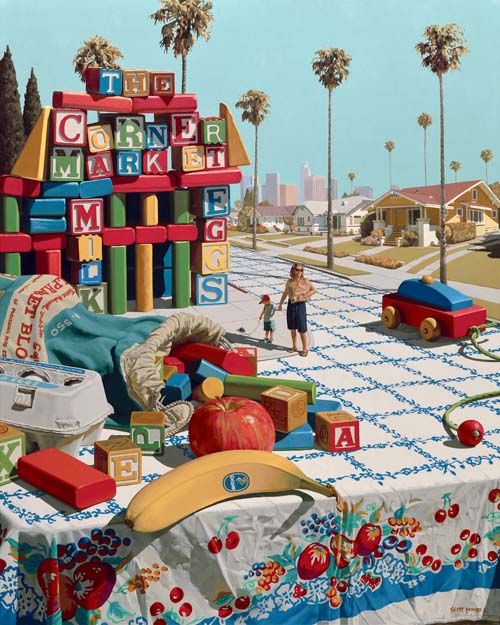
“Corner Market”

What Scott doesn’t already own, he finds on the internet. His only cardinal rule for painting is “to be true to the light source.” Otherwise, anything goes, as it can, and often does, in dreams: objects float or change drastically in size as they become part of the studied drama.

“Coffee and Donuts”

Artistic talent runs in the Moore family. Scott’s dad was a watercolorist and graphic designer. He encouraged Scott to pursue graphic design in college because it was too hard to make a living as a fine artist.

Continue reading