cheese, glorious cheese!

AMERICAN CHEESE 
by Jim Daniels


At department parties, I eat cheeses
my parents never heard of—gooey
pale cheeses speaking garbled tongues.
I have acquired a taste, yes, and that's
okay, I tell myself. I grew up in a house
shaded by the factory's clank and clamor.
A house built like a square of sixty-four
American Singles, the ones my mother made lunches
With—for the hungry man who disappeared
into that factory, and five hungry kids.
American Singles. Yellow mustard. Day-old
Wonder Bread. Not even Swiss, with its mysterious
holes. We were sparrows and starlings
still learning how the blue jay stole our eggs,
our nest eggs. Sixty-four Singles wrapped in wax—
dig your nails in to separate them.

When I come home, I crave—more than any home
cooking—those thin slices in the fridge. I fold
one in half, drop it in my mouth. My mother
can't understand. Doesn't remember me
being a cheese eater, plain like that.

~ from In Line for the Exterminator. © Wayne State University Press, 2007.

*
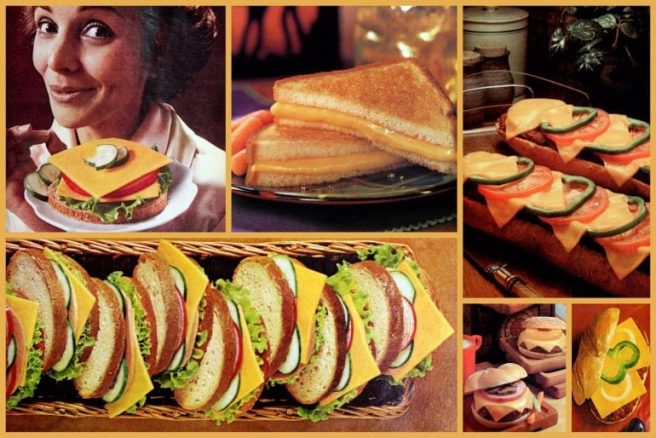
via Click Americana

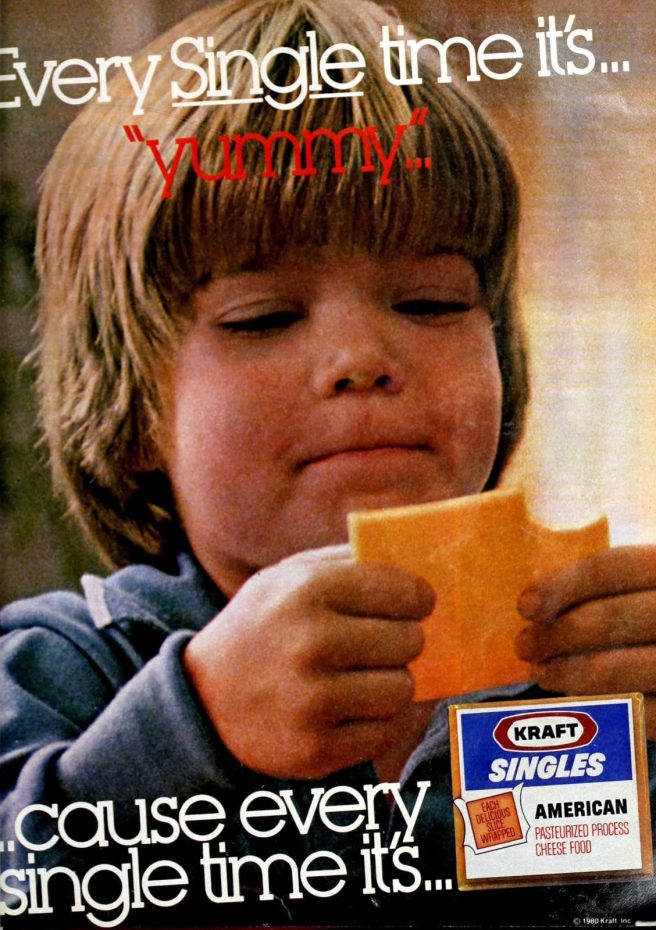
Raise your hand if you grew up with Kraft American Singles — *looks around* — okay, I see that’s most of you. 🙂
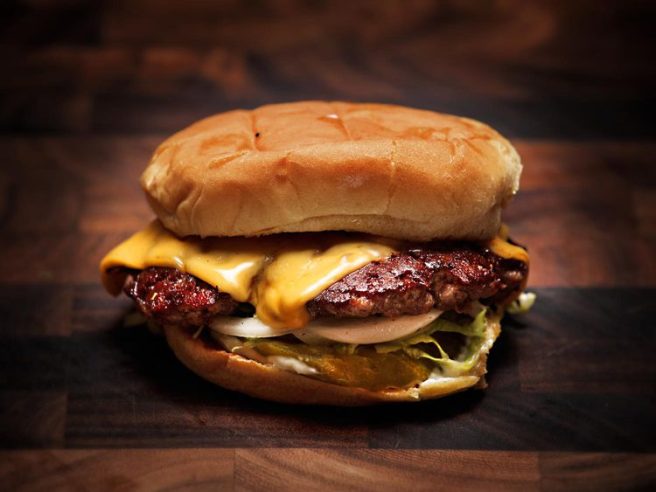
photo by J. Kenji López-Alt/Serious Eats

Did your Mom tuck them in your lunchbox sandwiches along with baloney or ham? Did you ever snack on a slice to satisfy between-meal munchies? Remember how your mouth watered as you anticipated that first bite of a juicy grilled burger with melty cheese oozing down the sides? Or best of all, what about the fine art of slowly pulling apart a warm grilled cheese sandwich just to see how far those gooey strings would s-t-r-e-t-c-h?
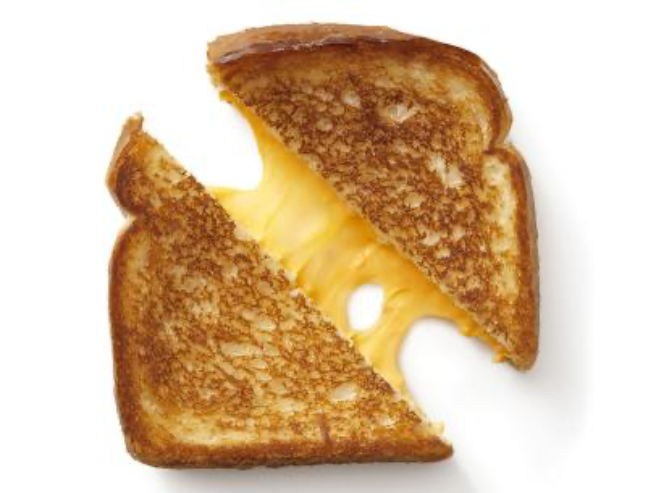
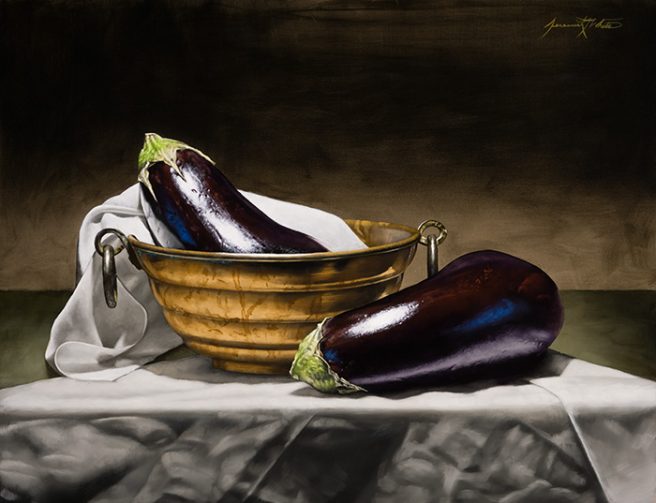
photo by Ralph Smith/Food Network
Continue reading

“What I Learned from My Niece” by Lori Levy

“Gleaming skin; a plump elongated shape: the eggplant is a vegetable you’d want to caress with your eyes and fingers, even if you didn’t know its luscious flavor.” ~ French Chef Roger Vergé

“Eggplants and Copper” by Jeremiah J. White.

Ahhhh . . . the eggplant has returned! *kisses bunched fingertips**

Remember when I shared Lori Levy’s wonderful poem, “Not a Hollywood Movie” for Valentine’s Day? We learned she squeezes fresh orange juice for her husband in the morning, while he patiently fries eggplant for dinner, eggplant that she loves stuffing into pita bread “with anything, everything.” That’s how I learned about sabich, a popular Israeli street food.

Recently, Lori sent along another delectable food poem in which we learn a little more about her love of eggplant and a practice suggested by her niece that I’m totally on board with. See if you agree. (This poem will appear July 9 in Certain Age Magazine.) 🙂

*

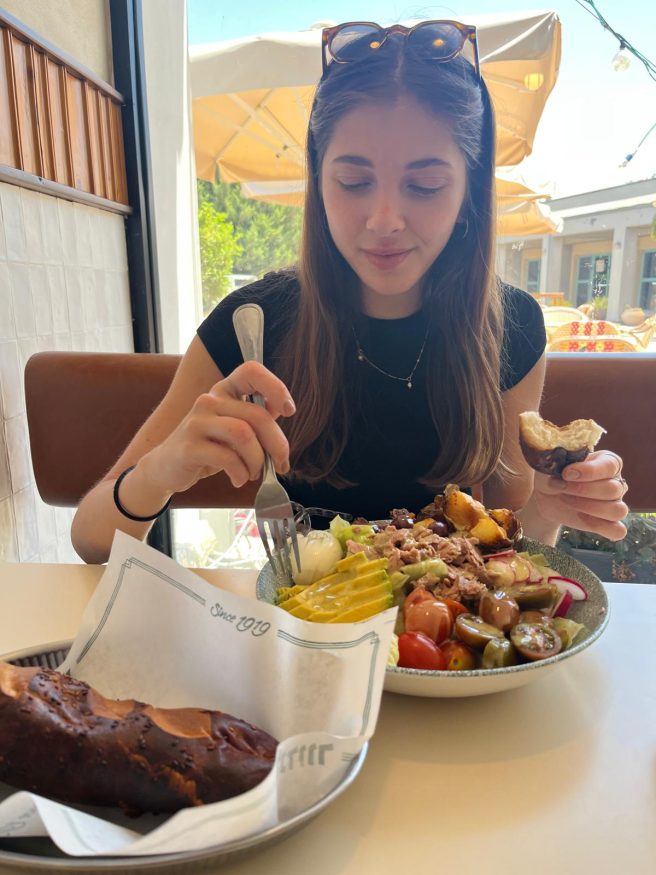
Lori’s niece Ofri pursuing a favorite hobby.
WHAT I LEARNED FROM MY NIECE
by Lori Levy

When asked what her hobbies are,
my 22-year-old niece says one is food—
eating it, not cooking it. Good food,
which, for her, means anything from shawarma to
endive salad with fruit and cheese, gnocchi with
pink sauce, purple soup with kubeh and beets.
I love that a hobby can be as simple as
savoring—not riding a bike over rough terrain
or kayaking down a river, like others in my family.
No action required but
bringing a fork or spoon to your mouth.

Maybe my hobby is eggplant.
On this visit to Israel, I scan the menu
for anything with eggplant: pasta, sandwiches, salad.
My brother-in-law Hiski
fries eggplants for us because I crave sabich.
I fill pita with chopped salad, hard-boiled eggs,
tahini, amba, and my beloved eggplant,
almost closing my eyes in anticipation
of the first bite.

My niece, Ofri, says another hobby is
sitting on the beach.
I could claim that one, too.
Not sailing or surfing or scuba diving.
Just sitting on a beach chair,
still and silent as a rock,
as the sky turns red over the Mediterranean—
pita with eggplant in a picnic basket beside me.

~ Posted by permission of the author, © 2025 Lori Levy.
Continue reading

“Pieces of Silver” by J.I. Kleinberg (+ a giveaway)

“They dined on mince and slices of quince, which they ate with a runcible spoon.” ~ Edward Lear (The Owl and the Pussy-Cat, 1870).

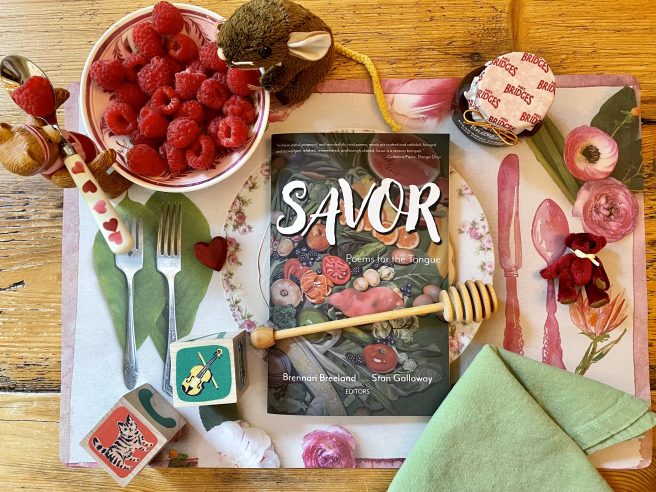
For your delectation today, a sample poem from a new food poetry anthology, Savor: Poems for the Tongue, edited by Brennan Breeland and Stan Galloway (Friendly City Books, 2024).

I’m slowing making my way through this exquisite word banquet featuring 72 diverse poets from around the globe. Talk about food for thought and a feast for the senses!

From the sweet memories of grandmother’s kitchen to the spicy tang of street food in bustling cities, from the bitter taste of loss to the umami of love rekindled over shared meals, this collection plates up a spectrum of human experiences.

The table is set. Let’s eat!

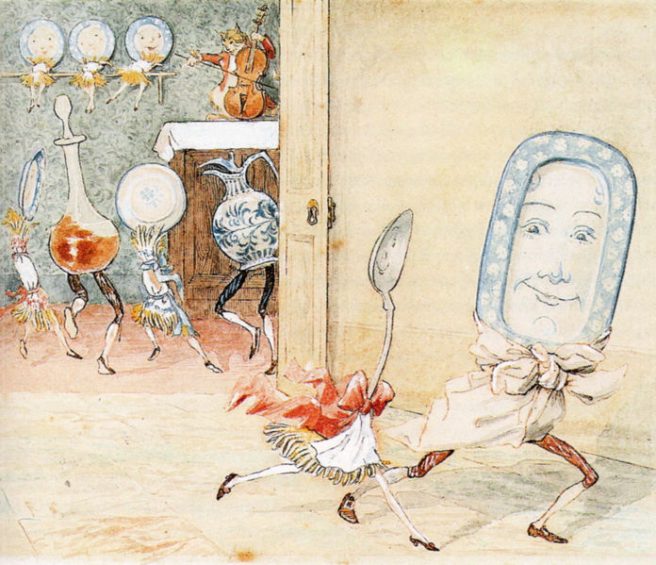
Randolph Caldecott (“And the Dish Ran Away with the Spoon,” from Hey Diddle Diddle and Bye, Baby Bunting, 1882).
PIECES OF SILVER
by J.I. Kleinberg

I wonder how it is to be a spoon. To slip one curve
beneath, to gentle from its bowl a berry, slide edge-wise
into ice cream, into the warm cavern of a mouth.
How it is to both resist and hold flavor in the declension
of the body, to separate and deliver, to stir in clinking dance.
Friend to hand and tongue, to absinthe, to dish --
remember the cow? remember the moon?

Dulled-edged, round-toothed knives school in the drawer,
silvery herring, decorous for butter and condiments,
honey and peas, familiars to plate and tablecloth.
I wonder how it is to be a real blade -- remember the mice?
-- honed to hurt, to shear, stab, cleave. How it is to slice,
paper-thin, a gift for the tongue: fresh tomato, ripe peach.
How it is to be fanged, incisive, to be a surgeon for the truth.

How far we are now from nursery rhyme, from spooning
in the velvet-lined night. Implement taunts us, stainless
both praise and accession. Forklift, pitchfork, runcible spoon.
The drawer turned upside down, tarnished words noisy and futile.
Emily Post cannot resolve this clattered escalation of utensils.
Switchblade, forked tongue. What price a place at the table?

~ from Savor: Poems for the Tongue, edited by Brennan Breeland and Stan Galloway (Friendly City Books, 2024).
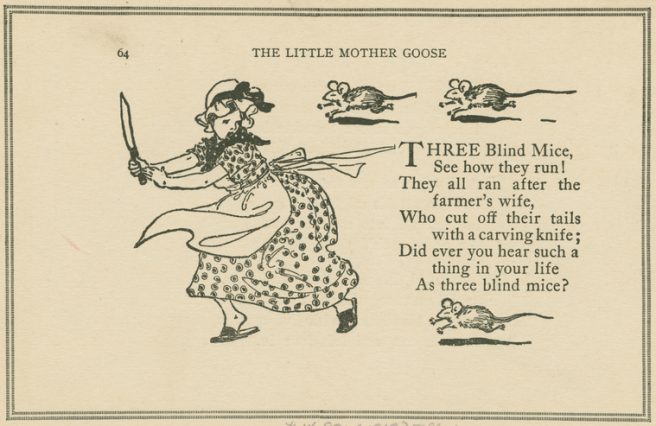
Jessie Willcox Smith (The Little Mother Goose, 1918).

*

Continue reading

two fruity Barbara Crooker poems (+ a summer blog break)

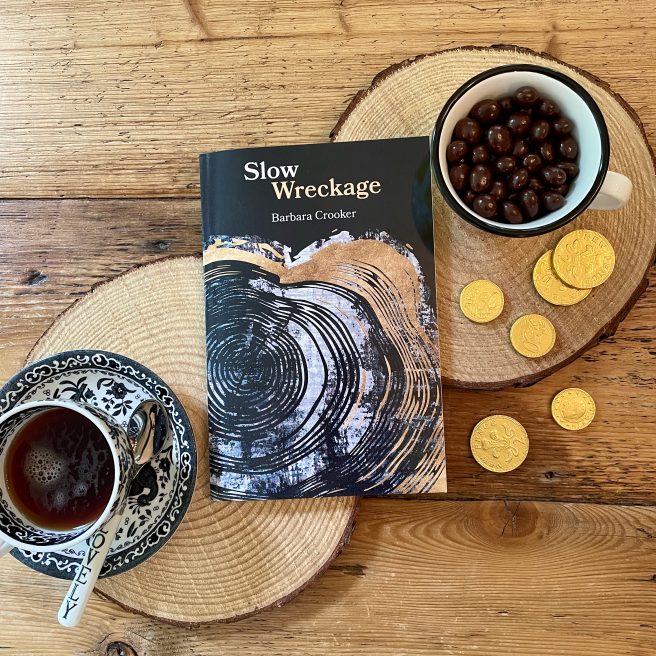
With the Summer Solstice sliding in next week, thought I’d share a couple of juicy poems from Barbara Crooker’s latest book, Slow Wreckage (Grayson Books, 2024).

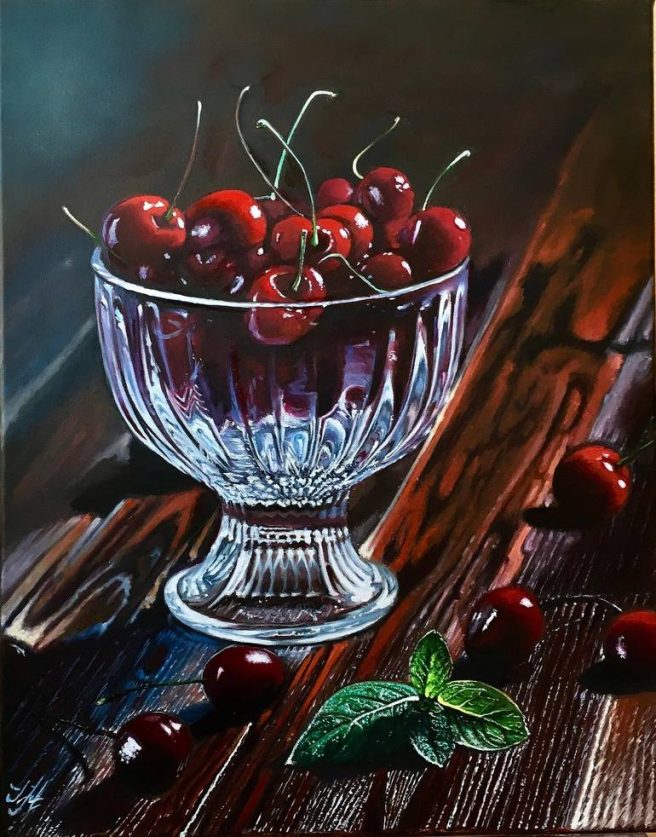
“Velvet Cherries in Crystal” by Tanya Hamilton.

Though her central theme for this collection is aging, loss and grief (her poems will especially resonate with baby boomers), she balances the inevitable with hope and gratitude for those luminous moments of clarity and startling beauty that occur when we take the time to be fully present.

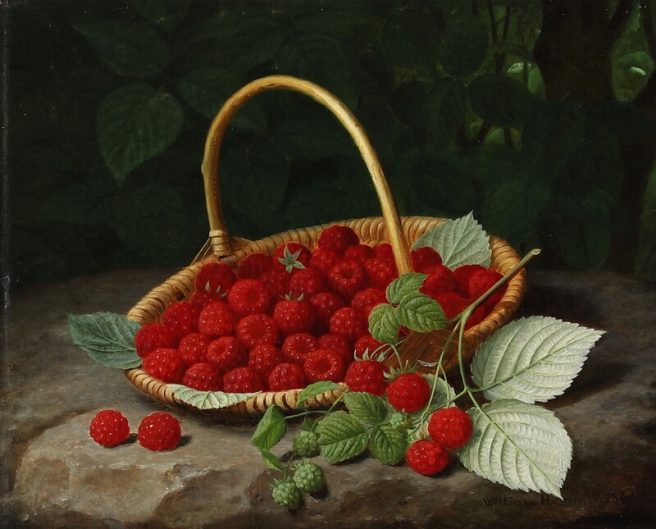
“Still Life with Raspberries in a Basket” by William Hammer (1863).

There are upsides to being ‘of a ripe old age’ — not the least of which is being able to enjoy summer’s generous bounty of sweet, juicy, sun-ripened fruit.

*

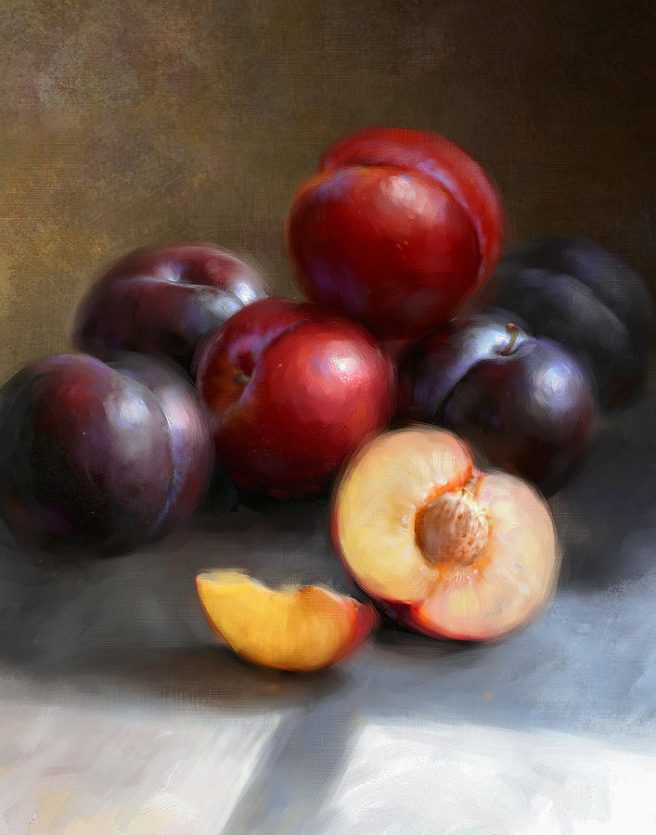
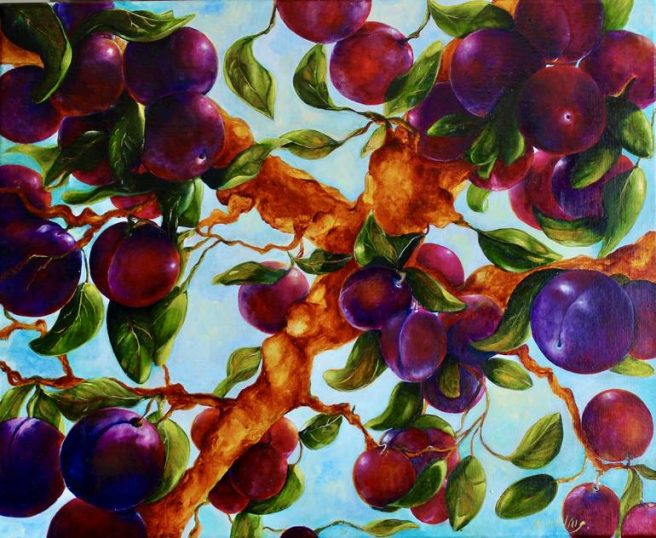
“Red and Black Plums” by Robert Papp
PLUM

Thumbprint of the moon,
blush of the summer sky.
A rim of sweetness
hemmed in damask.
Bruise-blue, ruby red,
autumn gold; the full
spectrum of sugar.  
The thrum of a tenor sax.
You brood on the tree,
biding your time.
If we're lucky, we'll 
find you whole, oval,
unstung by wasps, 
ungnawed by squirrels.
You will fill
a child's palm.
Hot juice
of an August night,
a gulp of dark wine.
A taste 
that winter,
which we know
is coming,
cannot erase.

Barbara: “Plum” came from both our terrible plum crop (we planted a little orchard when my husband retired (2 apples, 2 pears, 2 plums, 2 peaches)) and from the organic plums I bought at a local farm stand (Eagle Point).  So it’s a combination love poem to the fruit and also to the luscious “um” sounds I sprinkled throughout (including, or especially, summer) . . .

“Plum Tree” by Maria Petelina.
Continue reading

two poems from the wonder of small things

“Sometimes, love looks like small things.” ~ Tracy K. Smith

I’m a big fan of James Crews’s poetry anthologies and often dip into them whenever I need a calming moment of reflection or a fresh dose of inspiration.

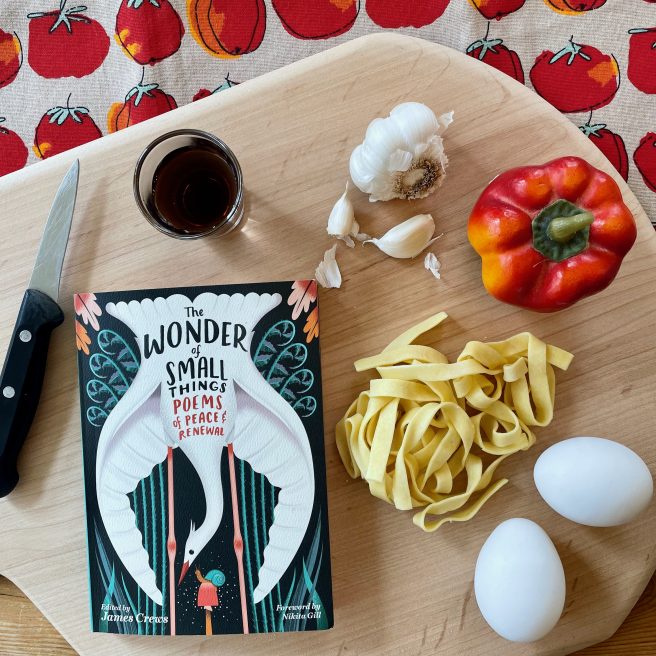
His third and most recent book, The Wonder of Small Things: Poems of Peace & Renewal (Storey Publishing, 2023), contains some especially delectable food-related poems, two of which I’m sharing today.

Both poets pay homage to their Italian grandmothers, recalling childhood memories that continue to sustain and nourish.

*

“Grandma’s Kitchen” by Lisa Pastille.
THE LESSON 
by Paola Bruni


On Sundays, Grandmother alight on the altar
of making and I, only old enough to kneel
on a wooden chair beside her, watched.
From the cupboard, she unearthed a dusky
pastry board, flour formed into a heaping crater,
the center hollowed. Eggs, white as doves. Salt.
Cup of milk, fragrant and simple. No spatula.
No bowl or mixer. Just a pastry board
and Grandmother's naked, calcified fingers
proclaiming each ingredient into the next.
She murmured into the composition
until the dough fattened, perspired, grew
under her ravenous eye. A rolling pin
to create a still, quiet surface. Then, the point
of a sharp knife chiseling flags of wide golden noodles.
For days, the fettuccini draped from wooden
clothing racks in her bedroom under the scrutiny
of Jesus and his Mother. Mornings, I slipped
into Grandmother's bed, dreamt about eating noodles
swathed in butter and the sauce of a hundred
ripe tomatoes roasted on the fire.

~ from The Wonder of Small Things: Poems of Peace and Renewal, edited by James Crews (Storey Publishing, 2023).

*

Continue reading