[guest post] Roxanne Troup on My Grandpa, My Tree, and Me

Like many stories, the final product of MY GRANDPA, MY TREE, AND ME is much more than the sum of its parts. And while I don’t know that I set out to write an intergenerational story, it became that through the process of revision.

The first spark of an idea for this story came about when I encountered a YouTube video of a commercial pecan harvest. I watched as a tractor with a padded arm grabbed hold of a tree and shook. Thousands of pecans thundered to the ground like torrential rain!

Though I’d grown up around farming, and knew a bit about mechanized harvesting, I was in awe. I’d never seen pecans harvested by tractor. I didn’t even know they made attachments for that! When we harvested pecans in Missouri, we gathered them by hand like the wild products they were. I was fascinated with the dichotomy of commercial harvesting versus home-harvesting and knew kids would find the process curious as well. But I needed an organic way to highlight both processes. When the phrase, “But not my tree,” came to me, I knew I’d found a story mechanism that could work.

My pre-draft (Yep, I just made that up. It’s the “draft” where all your ideas go—in no particular order.) was messy. It focused on the care and harvesting of pecans but wasn’t really a story. As a matter of fact, I never even finished it. But I also didn’t throw it away. I’d been reading, writing, and critiquing long enough to know it had elements I could work with. It included the refrain—“But not my tree”—that would stay with the story throughout each iteration. It hinted at a seasonal structure. And it had a nice child-like voice. I also never finished my first…or second…or third draft. When something isn’t working, I have a tendency to just stop and start again, taking what I learned in that partial draft to the next one (which I don’t recommend to anyone, but it is part of my process). 

Continue reading
[spicy review] Anni Dreams of Biryani by Namita Moolani Mehra and Chaaya Prabhat

Right now I am dreaming of the perfect Indian meal: To start, aloo tikki and samosas with a side of black pepper poppadums to wake up the taste buds, followed by chicken tikka masala or chicken korma with a steamy platter of vegetable biryani. Must also have some warm onion kulcha and garlic naan, and for dessert, gulab jamun. Mmmmm!

via Kuwait Times

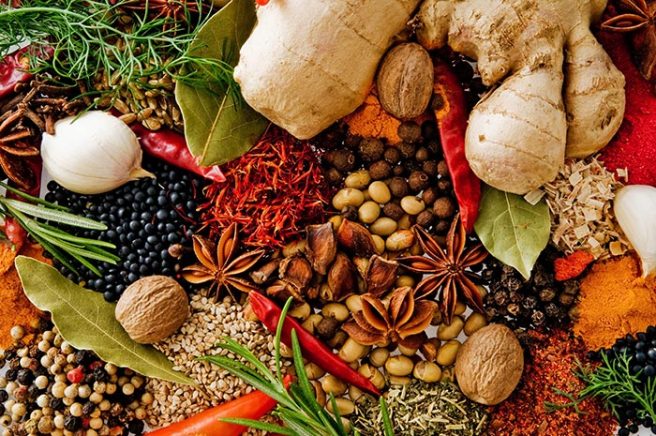
Savory and oh-so-aromatic – Indian cuisine is all about the spices, many of which begin with the letter ‘c’: cumin, coriander, cloves, cinnamon, cardamom. Let’s not forget mustard seeds, red chili, garum masala, and turmeric. An added bonus is that many of these also have valuable medicinal benefits.

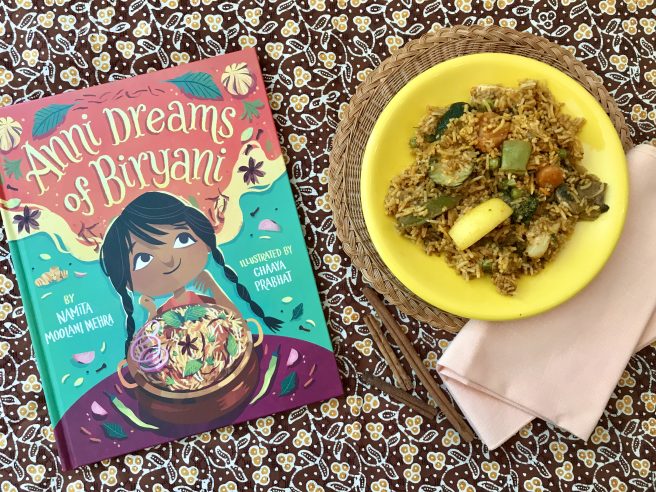
Though I’ve never cooked Indian food at home, the young girl in this new picture book, Anni Dreams of Biryani by Namita Moolani Mehra and Chaaya Prabhat (Two Lions, 2022), has inspired me to give it a try. I’m impressed by her passion for cooking and determination to make the best version of one of her favorite dishes.

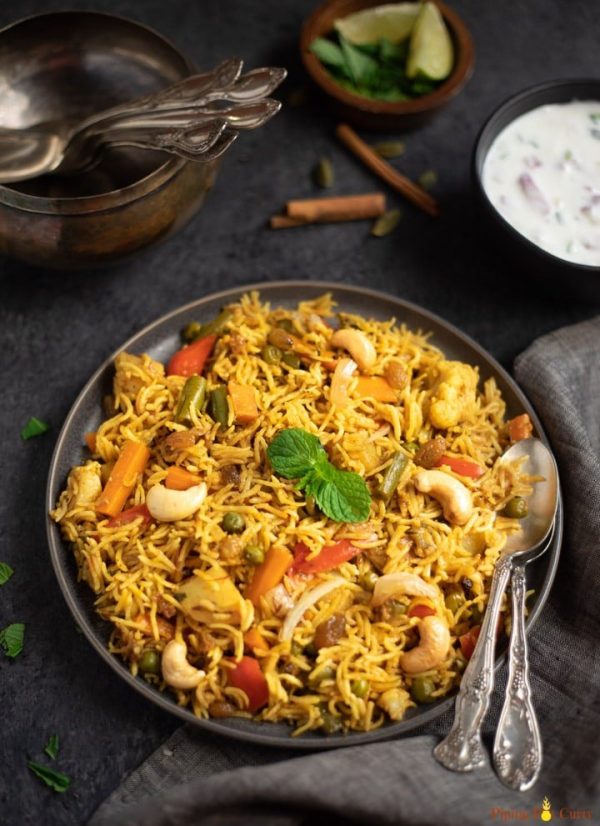
Vegetable Biryani via Piping Pot Curry.

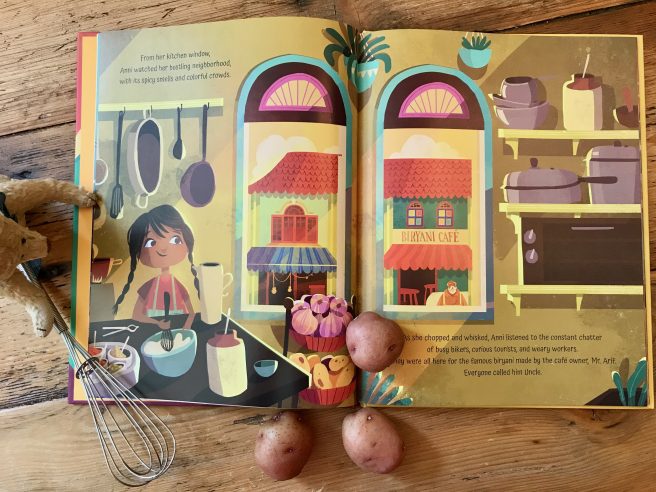
When the story opens, we learn Anni lives with her mother and grandmother across the street  from the Biryani Café in Little India. From her kitchen window, she has a bird’s eye view of the comings and goings of the bustling neighborhood. She listens to the “constant chatter of busy bikers, curious tourists, and weary workers” – all of whom are there to eat café owner Mr. Arif’s (Uncle’s) famous biryani.

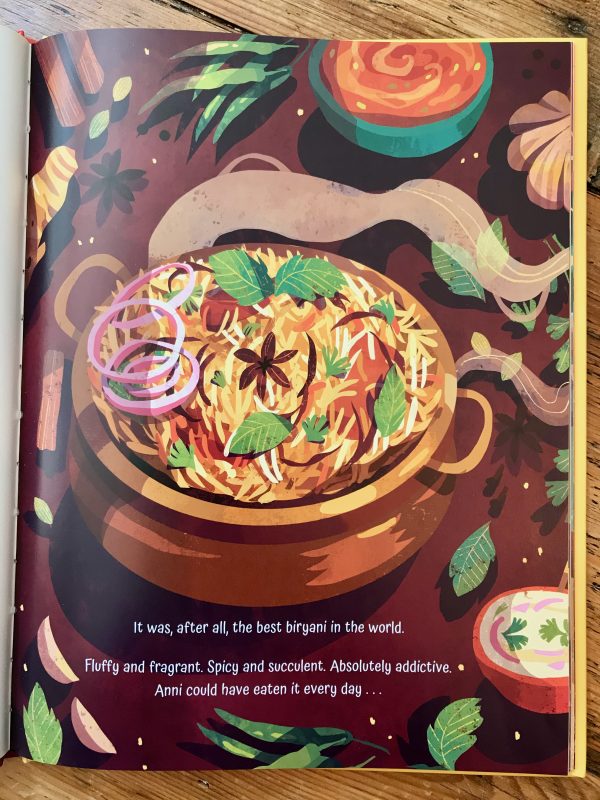
It was, after all, the best biryani in the world. 

Fluffy and fragrant. Spicy and succulent. Absolutely addictive.

Anni loves it so much she could eat the savory rice dish every single day. But Grandma deems it should be a once-a-week treat, so they only have it on Fridays. 

Continue reading

[review + recipe + giveaway] Abuelita and I Make Flan by Adriana Hernández Bergstrom

As soon as I saw “flan” in the title, my mouth began to water and I smiled at the little girl’s joyous face as she peeked into the oven with her grandmother.

What could be nicer than spending the day with a loved one making a family recipe? What  could possibly go wrong? Well . . .

Most of us know that without some sort of conflict there really wouldn’t be a story worth telling, and in Abuelita and I Make Flan, author-illustrator Adriana Hernández Bergstrom cooked up a truly engaging, suspenseful, heartwarming tale that will likely resonate with everyone – unless you happen to be absolutely perfect and have never made a mistake. 😇

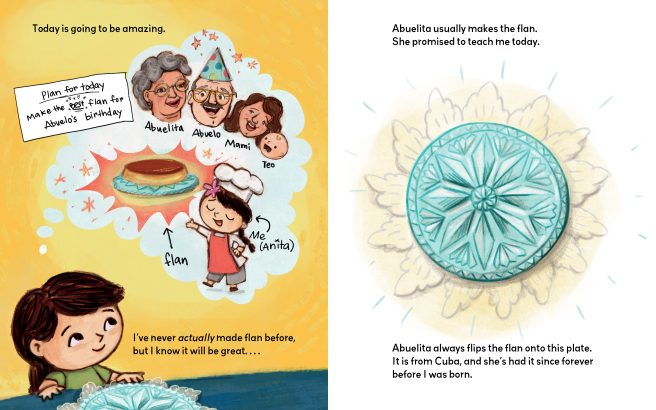
Young Anita is excited that her abuela is going to teach her how to make flan for Abuelo’s birthday. Not just any flan, mind you, but the best flan!

Before they even get started, Anita accidentally breaks Abuelita’s crystal flan serving plate – it’s from Cuba and she’s had it forever, before Anita was born.

OH NO.

 Anita has already ruined Abuelo’s birthday. 😦

“Maybe no one will notice?”

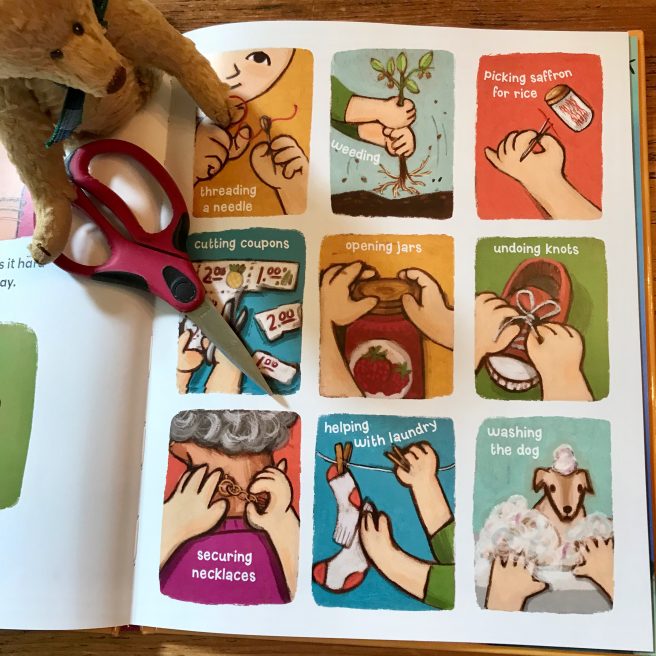
Anita knows she should tell Abuelita, but worries about angering or disappointing her, so she decides she will instead strive to be the best helper. After all, she’s usually good at helping Abuelita with things she has difficulty doing because of her arthritis (threading needles, opening jars, undoing knots).

Continue reading

[tasty review + giveaway] Things We Eat by Sylvia Vardell and Janet Wong

#61 in an ongoing series of posts celebrating the alphabet

Hmmm, looks like there’s only one chocolate chip cookie left. Go ahead and take it – I won’t tell. 

While you’re busy nibbling, I’ll tell you all about the brand new ABC food anthology edited by our favorite poetry goddesses, Sylvia Vardell and Janet Wong. 🙂

For Things We Eat (Pomelo Books, 2022), Sylvia and Janet donned their perky chef hats to cook up a tempting smorgasbord of 27 delectable poems just right for eager munchkins ages 3-7. 

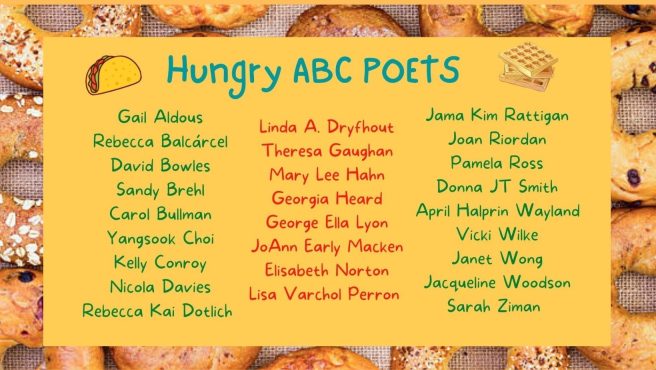
They invited 25 hungry poets –  both new and established – to write ekphrastic poems based on appetizing color photos of kids preparing, growing, shopping for, eating and sharing a variety of diverse foods. Janet herself penned two yummy poems for the collection: “Kimchi” and “Alphabet Menu.” 

Continue reading

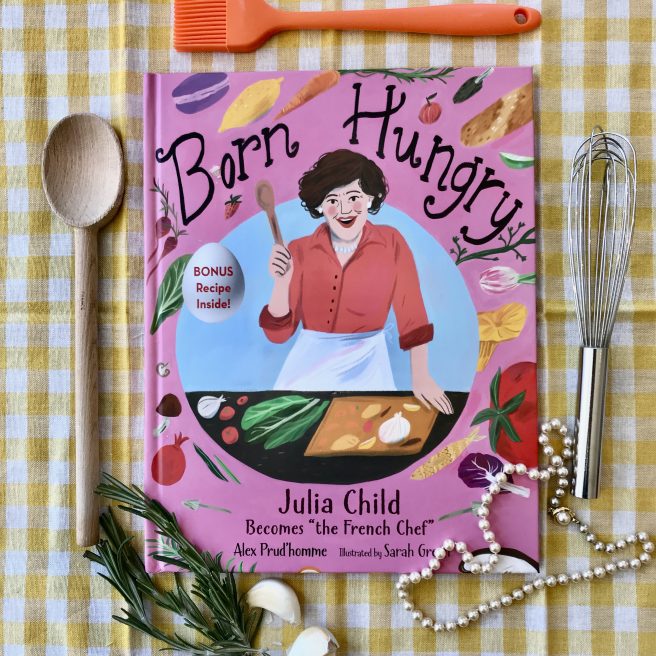
[now serving] Born Hungry: Julia Child Becomes “the French Chef” by Alex Prud’homme and Sarah Green (+ a giveaway!)

“Those early years in France were among the best of my life. They marked a crucial period of transformation in which I found my true calling, experienced an awakening of the senses, and had such fun that I hardly stopped moving long enough to catch my breath.” ~Julia Child (My Life in France, 2006).

When it comes to big appetites, Julia Child is hard to beat. 

Beyond food, Julia craved knowledge, adventure, and travel, and she thrived on excellence. Large in stature with an outsized personality to match, Julia took a big, juicy bite out of life and wholeheartedly shared her largesse. 

In this delectable new picture book biography, Julia’s grandnephew Alex Prud’homme highlights Julia’s early years in France, a time when she found love, discovered her true calling, and worked hard to achieve her goals of becoming a good cook and beloved teacher.

We’re first introduced to Julia McWilliams as a physically active, 6’2”, voraciously curious force of nature. Because her parents had a cook, she never saw the point of spending any time in the kitchen.

I was born hungry, not a cook.

She’d “always dreamed of having adventures and becoming a famous writer.” During WWII she volunteered as a clerk typist for the Office of Strategic Services (OSS) in Ceylon. It was there that she met her future husband, Paul Child, a painter, photographer, and bon vivant who had lived in Paris and could speak fluent French.

They got on very well despite their differences: he was ten years older, shorter, and “much quieter.” But they bonded over a mutual love of “food, books, and travel.”

Paul encouraged Julia to try foods from around the world; she encouraged him to take an elephant ride. She still couldn’t cook, but she did create her first recipe – for shark repellent!

After the war, Julia and Paul moved back to America and got married. Determined to be a good wife, she took cooking lessons to impress Paul. Her first meal, cow brains simmered in red wine, was a disaster because she’d rushed through the recipe. This only made her more determined than ever to become a better cook.

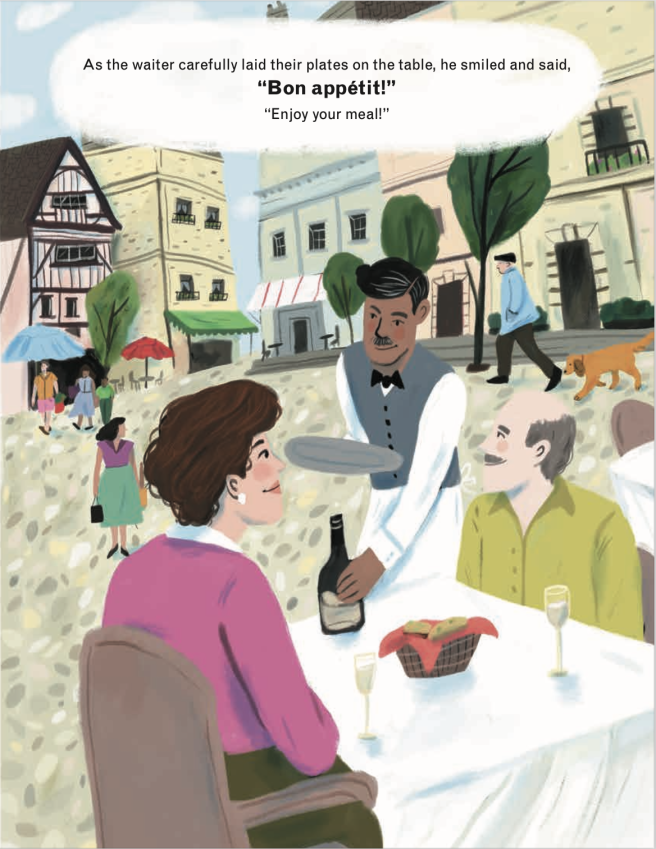
A couple of years later, they traveled to France for Paul’s new job at the U.S. Embassy. En route to Paris, they stopped at La Couronne in Rouen for lunch. Not just any lunch, of course, but the famous sole meunière meal that would prove life changing.

Julia inhaled the wonderful aroma of fish cooked in butter. Then she took a bite of the sole, experienced ‘a magnificent burst of flavor,’ and closed her eyes. She had never tasted anything so fresh and delicious. She tried to chew slowly, to savor every morsel, but the lunch was so good that she gobbled it down.

Continue reading