
“Whoever you are, no matter how lonely, / the world offers itself to your imagination, / calls to you like the wild geese, harsh and exciting — / over and over announcing your place / in the family of things.” ~ Mary Oliver
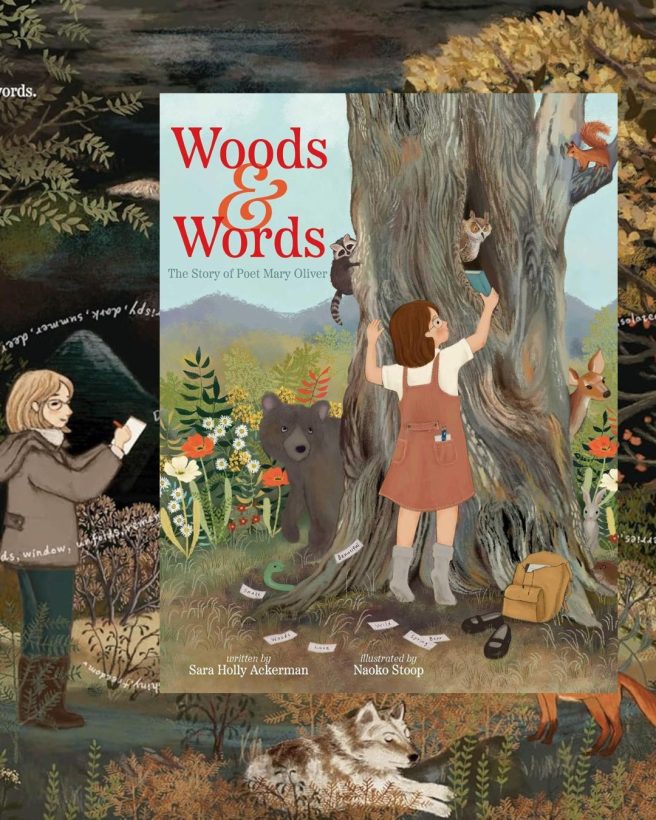
Beloved American poet Mary Oliver is well known for her sensitive, pure-hearted observations of the natural world, but did you know she credited her love of nature and poetry with saving her life?
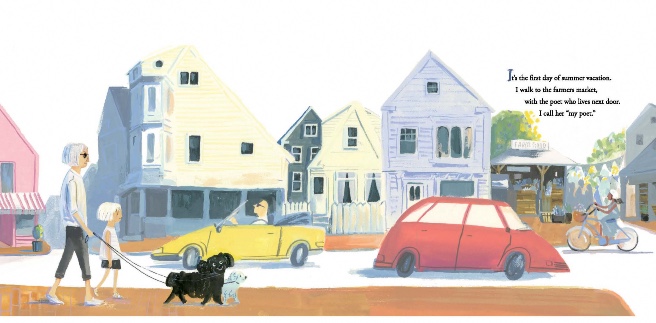
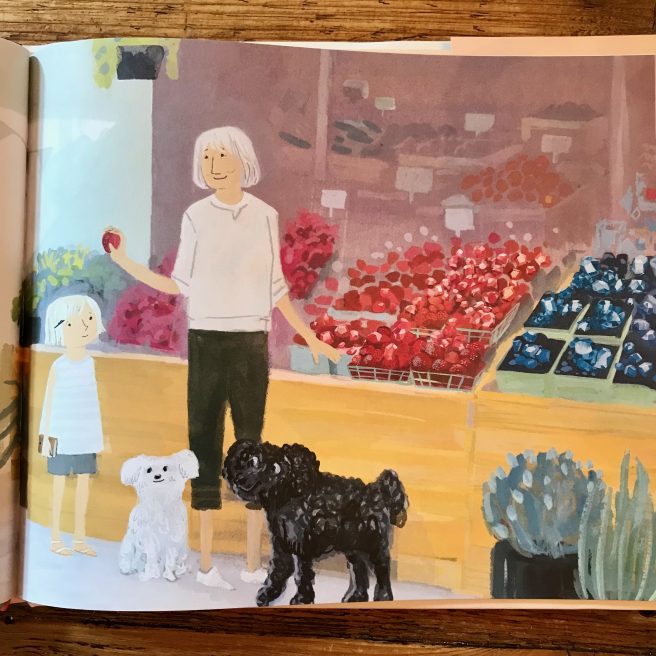
Thanks to Woods & Words: The Story of Mary Oliver by Sara Holly Ackerman and Naoko Stoop (Beach Lane Books, 2025), young readers will learn how a lonely girl survived a difficult childhood by finding refuge in the woods and writing about the wonders she found there. Her lifelong practice of walking in the wild and treating poetry as central to her very existence would earn her literary acclaim, but more importantly, the rare status of being a popular, best-selling poet in an otherwise poetry-indifferent age.
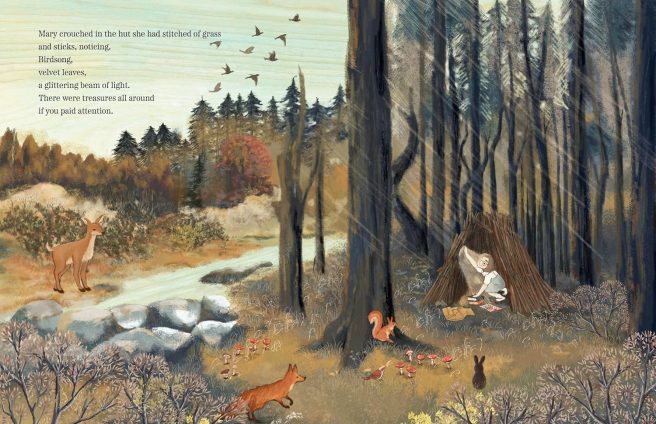
We first see young Mary in the woods, crouched in a grass-and-sticks hut she had stitched herself, “noticing” treasures like birdsong, velvet leaves, and “a glittering beam of light.”
Whenever she felt confined by classroom walls, she made the woods her school. There, she wrote, filling stacks of notebooks, alone except for books by favorite poets like Poe, Blake, and Whitman.
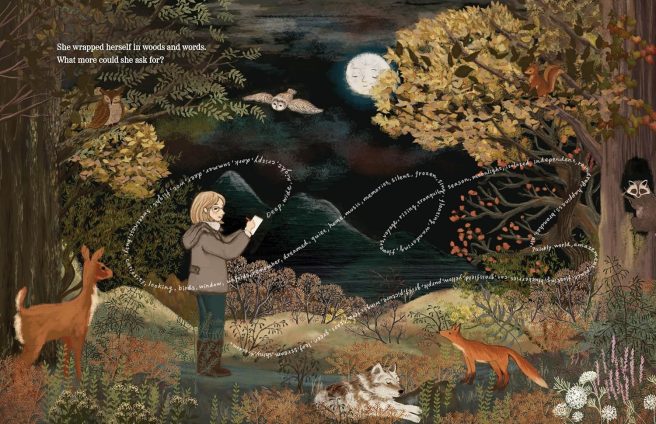
The spring after graduating from high school, Mary drove to Steepletop in upstate New York, where she stayed in an old farmhouse where the poet Edna St. Vincent Millay once lived. She helped Edna’s sister organize papers and “wrapped herself in woods and words. What more could she ask for?”
One day, Mary saw a visitor at the kitchen table — it was love at first sight! Mary and Molly became inseparable, capturing the world around them, Mary with her words, Molly with her camera.
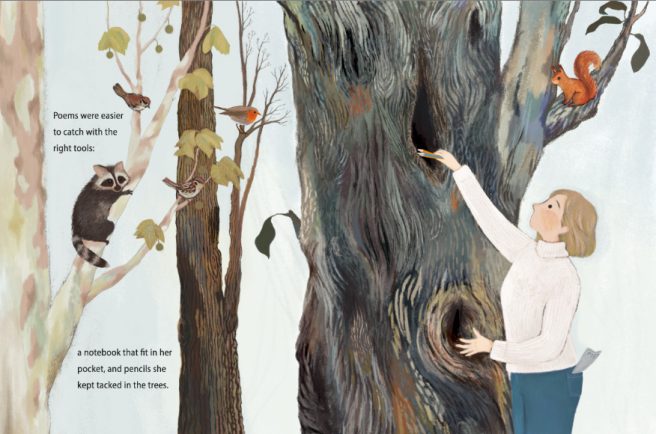
They eventually settled in Provincetown, Massachusetts, where Mary continued to walk the woods or along the shore, searching for poems: “There were always poems if you paid attention,” whether under leaves, on the backs of black snakes, or prompted by the sweet or rotten smells she encountered. She carried a pocket notebook and stashed pencils in trees so she’d always be ready.
Continue reading






 Jama's Alphabet Soup