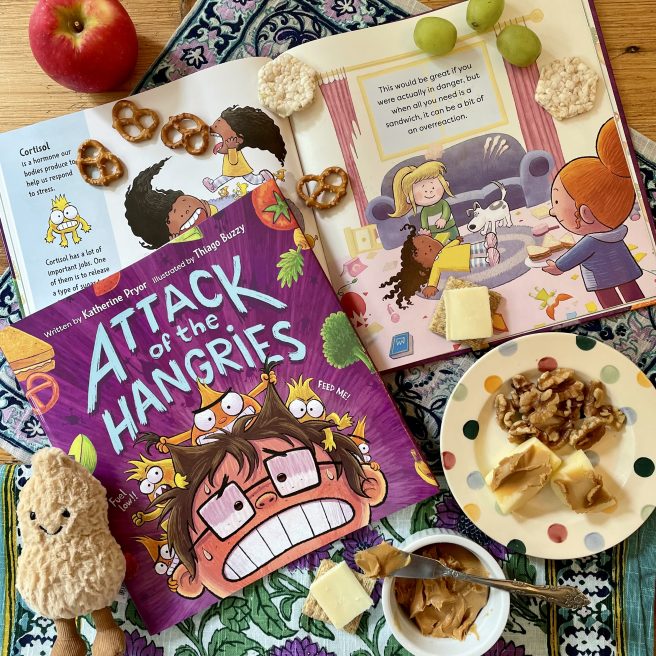
[ravenous review] Attack of the Hangries by Katherine Pryor and Thiago Buzzy

It happens to the best of us. Keeping busy, moving through an ordinary day, things seem to be going quite well, when suddenly — out of nowhere — ATTACK!

Instead of our cheery, cooperative (and might I add) cute and cuddly selves, we’re cranky, cantankerous, even a bit CRAZY. Help! What’s going on?!
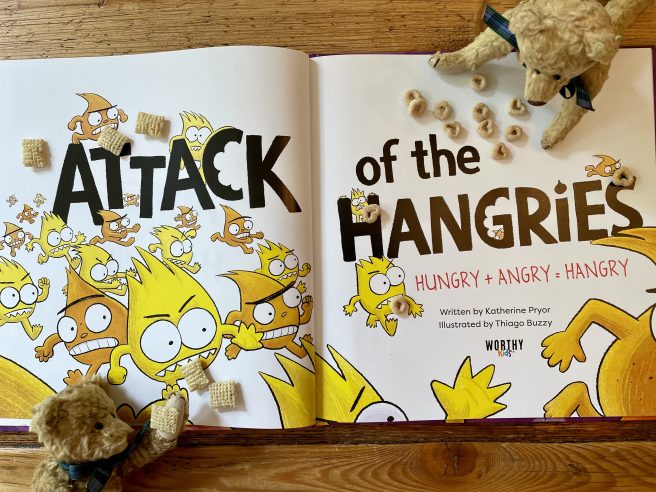
We’re HANGRY, of course. Hungry + Angry = Hangry. Simple as that. Good thing there’s a brand new picture book all about it. In Attack of the Hangries by Katherine Pryor and Thiago Buzzy (WorthyKids, 2025), we learn what the hangries are, what causes them and how to effectively keep them at bay.

Entertaining, informative, and all too relatable, this belly rumbling tome is powered by Pryor’s lively, engaging prose and Buzzy’s hilarious, high octane cartoons, providing readers with lots to chew on as they consider the science behind hunger and mood.
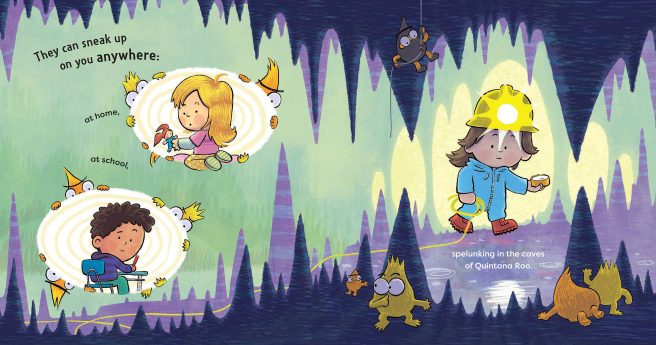
First off, we’re told the hangries are sneaky. No matter where you are or what you’re doing (home, school, “spelunking in the caves of Quintana Roo”), or whether you’re having a terrible or fantastic day, the hangries can take over.

Your brain scrambles. Your limbs flail. All you want to do is SCREAM! AT EVERYONE! FOR ANYTHING!

Continue reading
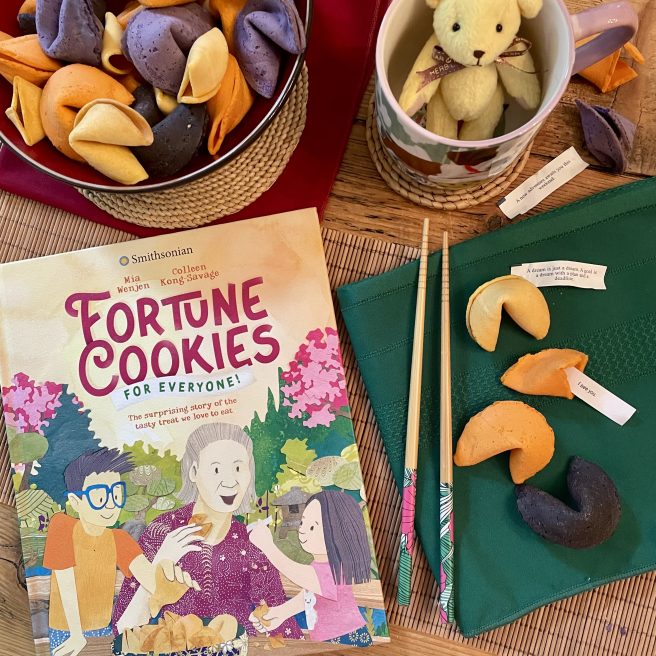
[crunchy review] Fortune Cookies for Everyone! by Mia Wenjen and Colleen Kong-Savage

Everyone looks forward to cracking open a fortune cookie after finishing a mouthwatering Chinese meal. What does the future hold (“You will meet a handsome stranger”)? What handy bit of wisdom awaits (“A closed mouth gathers no feet”)?

While we all enjoy these fun and pithy messages, it’s logical to assume fortune cookies are a Chinese invention, when in fact they most likely originated in Japan. What’s more, most people in China haven’t even heard of fortune cookies, let alone eaten them! 😯

In Fortune Cookies for Everyone!: The Surprising Story of the Tasty Treat We Love to Eat (Smithsonian/Red Comet Press, 2025), Mia Wenjen and Colleen Kong-Savage serve up a captivating intergenerational tale flavored with sides of history, mystery, and cultural pride. Learning about a food’s interesting backstory makes it even tastier, don’t you think?

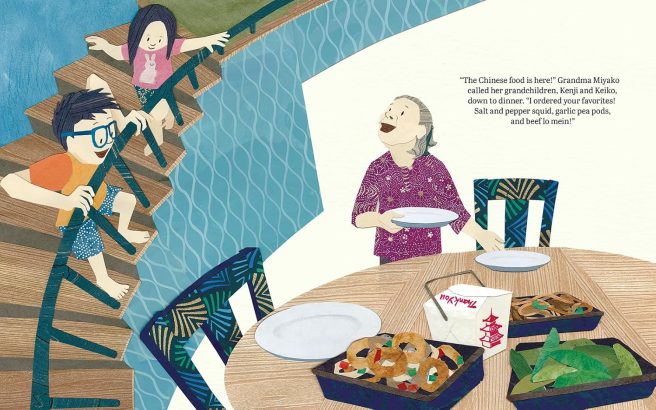
As the story opens, Grandma Miyako has ordered Chinese takeout for her grandchildren Kenji and Keiko. After they’ve feasted on their favorites — salt and pepper squid, garlic pea pods, and beef lo mein — she hands them their fortune cookies, mentioning that she knew who invented them.

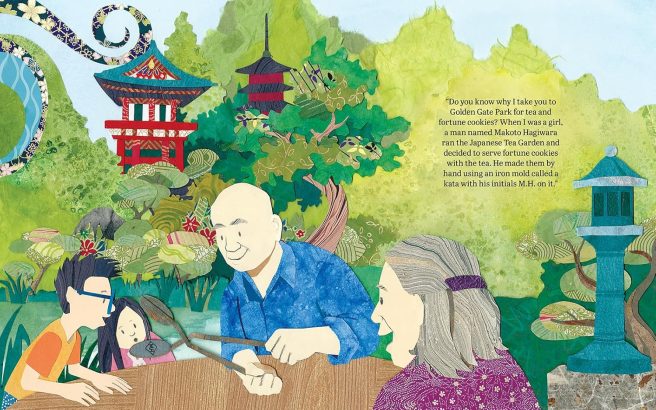
The kids are excited to hear more about that in the “long and twisty story” Grandma tells using her scrapbook. When she was a girl, Makoto Hagiwara, the man who ran the Japanese Tea Garden in Golden Gate Park, served tea with miso-flavored fortune cookies he made by hand using a kata (iron mold).

Because the cookies were so popular, Hagiwara asked Grandma’s best friend Yukiko’s father (who owned a bakery) to help him. Mr. Okamura was happy to do so, suggesting they change the cookie flavor to sweet vanilla and butter to make them more appealing to Americans.

Continue reading

[mouthwatering review] The Traveling Taco by Mia Wenjen and Kimberlie Clinthorne-Wong

What’s on the menu today?

Hmmm . . . let’s see. I’ll start with a plate of refreshing ceviche, followed by spicy jerk chicken — and then for dessert, rice pudding. Sound good?

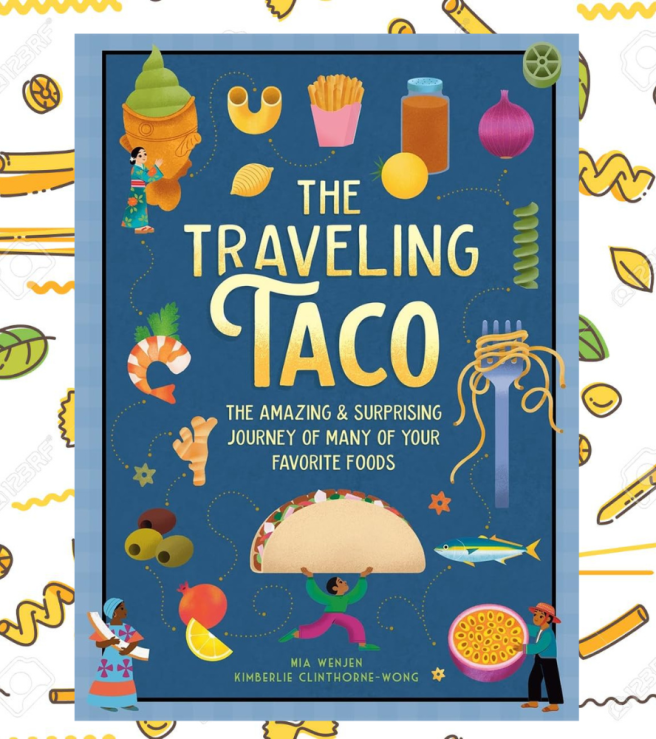
In Mia Wenjen’s delectable picture book The Traveling Taco: The Amazing & Surprising Journey of Many of Your Favorite Foods (Red Comet Press, 2025), hungry readers are invited to nibble from a scrumptious smorgasbord of twelve different dishes, everything from pizza and pasta to cheesecake and churros.

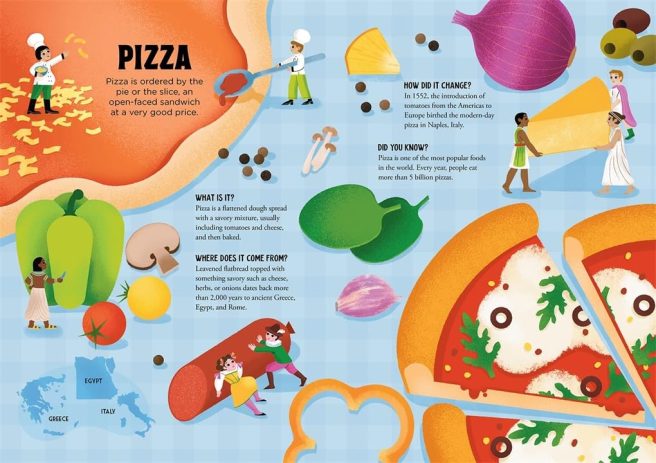
Whimsically illustrated by Kimberlie Clinthorne-Wong, the history of each of these popular foods is served up in a double page spread with an introductory rhyme + appetizing info bites answering four basic questions:

  • What is it?
  • Where does it come from?
  • How did it change?
  • Did you know?

Learning about food origin and evolution is fascinating as we travel across the globe and back through time. Do French Fries come from France or Belgium? Did you know people all over the world eat more than 5 billion pizzas every year, or that cheesecake can be traced back to Ancient Greece and the first Olympic Games?

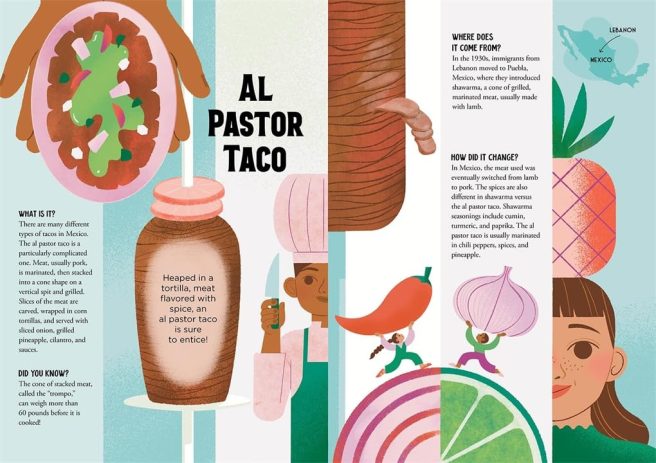
The feast begins with the tastebud tempting Al Pastor Taco; we learn that it actually traveled to Puebla, Mexico in the 1930s via Lebanese immigrants who “introduced shawarma, a cone of grilled meat, usually made with lamb.”

Heaped in a tortilla, meat flavored with spice, an al pastor taco is sure to entice!

Continue reading

[lickable review] Ice Cream Everywhere by Judy Campbell-Smith and Lucy Semple

Many of my fondest food memories revolve around ice cream:

Lining up for a Milk-Nickel in the school cafeteria. Frequenting Dairy Queen for Dilly Bars and chocolate sundaes. Savoring Frosty Malts while watching Elvis Presley movies at the neighborhood theatre. Visiting my first Baskin-Robbins (butter pecan!). Raiding our home freezer for Creamsicles, Fudgsicles and Drumsticks. Jumping up and scrounging for coins when hearing the ice cream truck on our street.

Ice cream has got to be the happiest of treats because it brings out the kid in everyone. No matter the form or flavor, where or when you eat it, ice cream is pure joy.

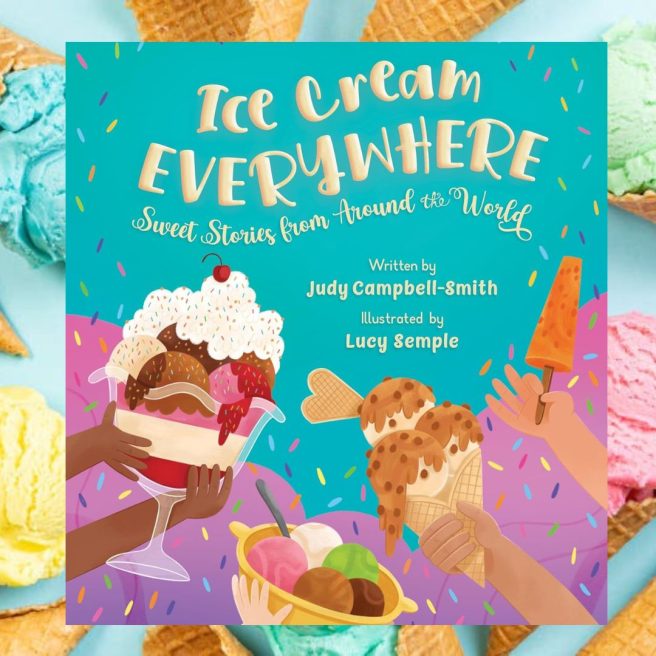
Joy is the unifying theme in Judy Campbell-Smith’s scrumptious new picture book, Ice Cream Everywhere: Sweet Stories from Around the World, illustrated by Lucy Semple (Sleeping Bear Press, 2024).

On Judy’s menu: twelve different kinds of ice cream — most of which were new to me — from faraway places like Cuba, Argentina, India, Japan and New Zealand. Did you know that in Germany, ice cream can look like noodles, or that there’s a Turkish ice cream with a chewy, stretchy texture that allows sellers to do tricks with it? Or how about the unique Libyan treat, baklava gelato, a product of Italian colonialism? Fascinating stuff!

Tasty ice cream facts go down easy thanks to Campbell-Smith’s appetizing blend of fiction and nonfiction. Each double page spread features an appealing vignette of a child eating the highlighted ice cream + a few sidebar tidbits (history, tradition, context). Each is introduced as a different kind of joy.

Continue reading

[review + recipe + giveaway] Awesome Earth by Joan Bransfield Graham and Tania García

I’ve always been fascinated by volcanoes. When you grow up in Hawaiʻi, it’s a point of pride being able to claim that your home state has the largest active volcano on Earth (Mauna Loa), and it’s also the only state situated entirely on an archipelago. Kīlauea’s most recent (and ongoing) eruption on the Big Island started in December 2024, while Mauna Loa last spouted off in 2022.

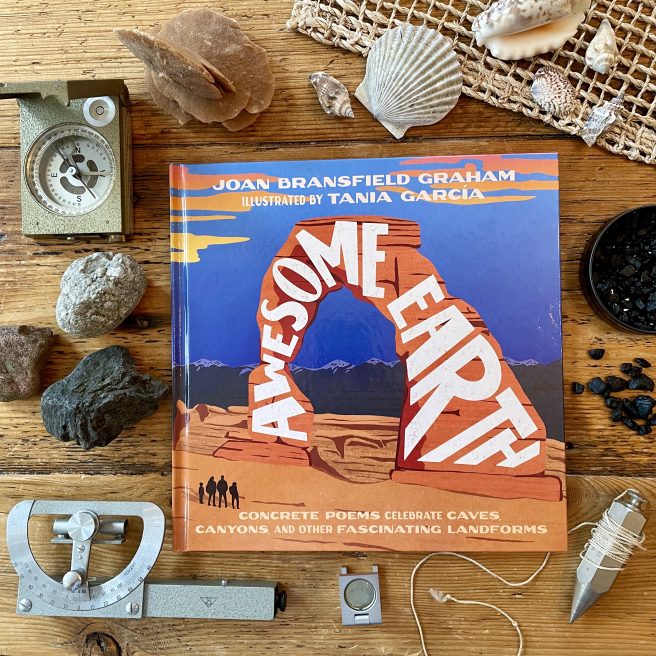
The breathtaking spectacle of molten lava slowly making its way to the ocean and thereafter creating new land is both humbling and awe-inspiring. When I read Joan Bransfield Graham and Tania García’s brand new poetry picture book, Awesome Earth: Concrete Poems Celebrate Caves, Canyons and Other Fascinating Landforms (Clarion Books, 2025), I was reminded of how our home planet is an ever evolving, dynamic entity full of beauty and wonder.

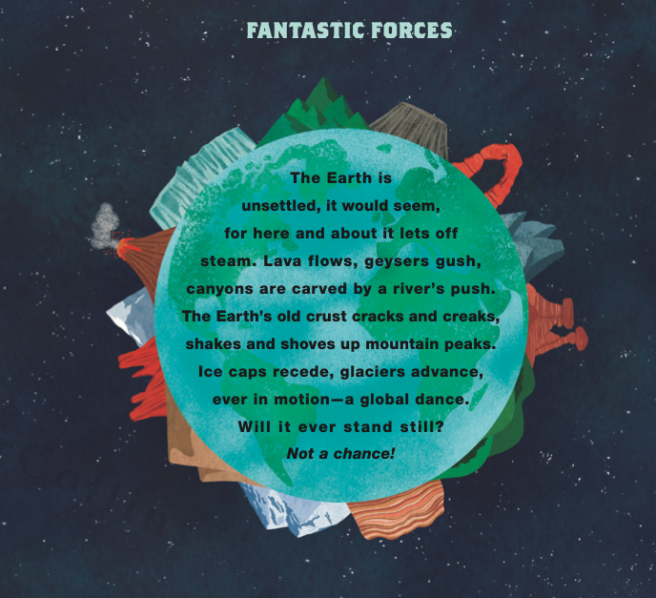
FANTASTIC FORCES

The earth is
unsettled, it would seem,
for here and about it lets off
steam. Lava flows, geysers gush,
canyons are carved by a river's push.
The Earth's old crust cracks and creaks,
shakes and shoves up mountain peaks.
Ice caps recede, glaciers advance,
ever in motion -- a global dance.
Will it ever stand still?
Not a chance!

Fun to read and loaded with fascinating information, Awesome Earth is Graham’s valentine to the planet and a budding geologist’s dream. Her use of concrete poetry to describe a variety of landforms is the perfect way to celebrate their physical attributes, whether Continent or Island, Hill or Valley, Plain or Plateau. After all, landforms are all about size, shape, and structure; they themselves are a kind of topographical poetry.

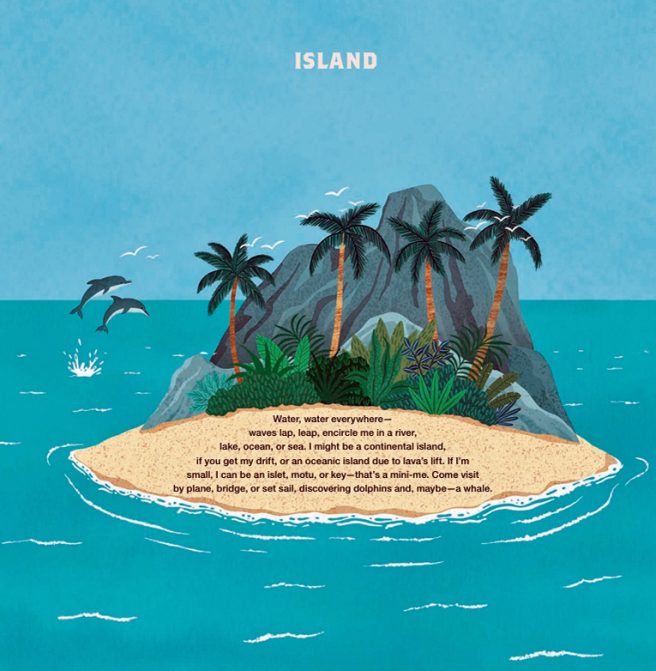
Kids will find the 20+ poems delightfully accessible as Graham strikes a friendly tone via (mostly) first person point of view and personification to establish a sense of immediacy and direct engagement. Who could resist an amiable Island explaining the difference between his continental and oceanic ilk, or smaller “mini-me” versions of himself? He even invites readers to visit sometime — so charming!

We also get a sense of Mountain’s pride and majesty, as he seeks the sky, “enrobed with snow,” piercing the clouds, and I’m only too willing to forgive Peninsula’s boast: “I’ve got miles and miles of rocky or sandy, dandy coast!”

Continue reading