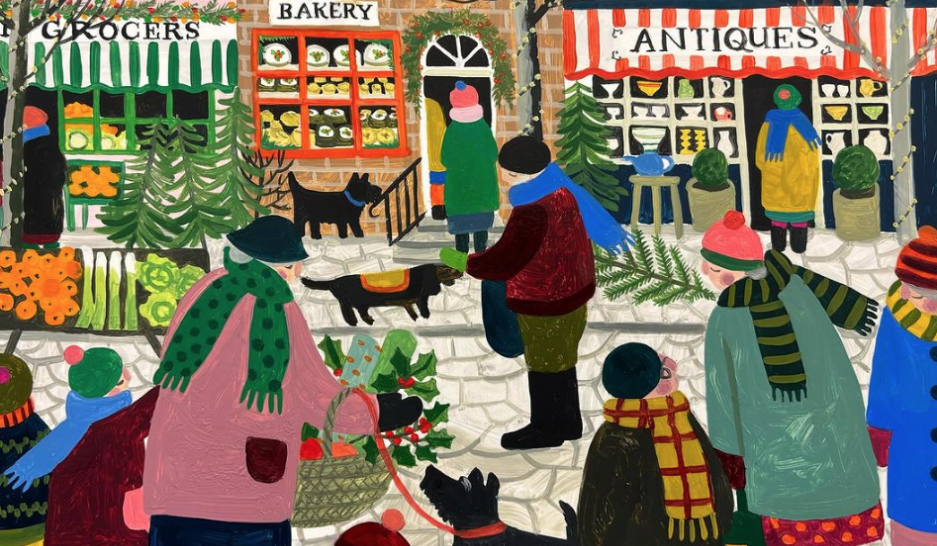
“As long as one has a garden one has a future; and as long as one has a future one is alive.” ~ Frances Hodgson Burnett

Since The Secret Garden has always been one of my favorite children’s books, I was especially excited to see Angelica Shirley Carpenter and Helena Pérez García’s recent picture book biography about Frances Hodgson Burnett.
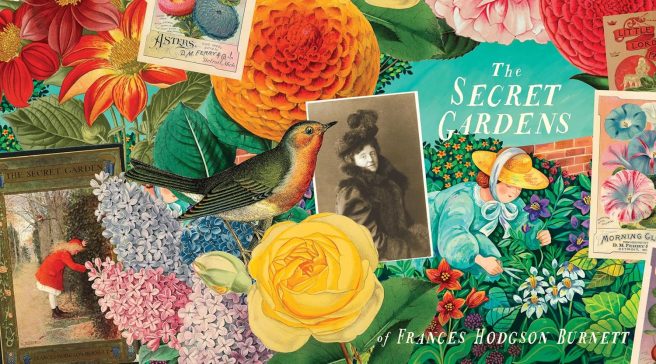
Learning how Burnett coped with hardship and adversity in her own life shed new light on my appreciation of the novel. Now I understand why gardens were so important to her, not only as places of beauty and inspiration, but of comfort and healing. I also found it intriguing that she had a luxurious lifestyle that was shocking by Victorian standards (a twice divorced smoker who spent time away from her children). 🙂
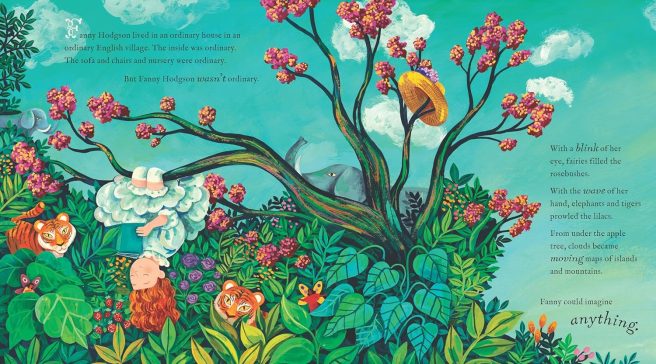
We first meet Fanny Hodgson as a girl who lived in “an ordinary house in an ordinary English village.” But Fanny herself was anything but ordinary because of her vivid imagination. In her world, “fairies filled the rosebushes” and “elephants and tigers prowled the lilacs.”
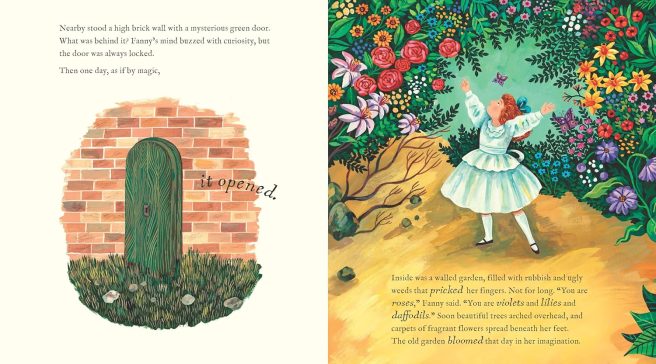
Her idyllic existence was upended when her father died (she was around six), and her family was forced to move to Manchester so her mother could run his store. The dull and grey city was a stark contrast to the beloved garden she’d left behind, but Fanny’s imagination sustained her, as she envisioned roses, violets, lilies and daffodils abloom in an old abandoned garden actually “filled with rubbish and ugly weeds.”
After a few years, her mother had to sell the store as businesses in Manchester failed. Short on money, Fanny’s family then relocated to a small village in Tennessee at the suggestion of her uncle, who thought her brothers could find work there. Unfortunately, they weren’t able to earn as much money as they’d hoped, so sometimes the family went hungry. Fifteen-year-old Fanny wanted to help, but there were no jobs for girls.
Undeterred, she put her imagination to work once again and invented her own job, opening the town’s first school. Her eight students paid with “cabbages, eggs, and potatoes,” and she read them Shakespeare. She also built a “secret room” in the woods behind her house, “weaving walls from branches and vines.”
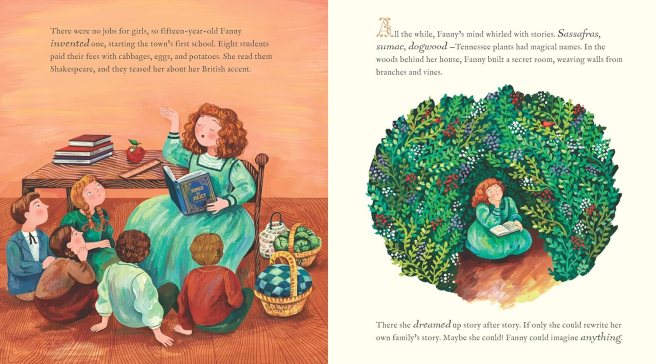
There, in her cozy sanctuary, she dreamed up stories. She knew that magazines paid for stories; could she sell one of hers? She earned money for writing supplies by picking and selling wild grapes at the market. She wrote a love story and sent it out — and to her surprise, sold it for thirty-five dollars — enough to feed her family for weeks!
Continue reading

 Jama's Alphabet Soup