When we were little, we likely heard about the cow jumping over the moon and the dish running away with the spoon. We learned the moon was made of green cheese, and that when the man in the moon tumbled down too soon, he burned his mouth eating porridge.
Whether in nursery rhyme or popular folklore, the moon continues to charm us. No surprise that kids are especially captivated by its presence in the night sky and curious about its changing appearance.
In Sweet Dreams: Moon Poems for Bedtime (Schiffer Kids, 2025), beloved Alabama poet Charles Ghigna serves up a delightful platter of lunar treats illustrated by Jacqueline East. The fourteen short poems in the collection invite young readers to explore the moon’s many guises, whether playful, evocative, majestic or enchanting.
When night has fallen and children are tucked safely in their beds, they can imagine the moon as a lollipop, orange, pumpkin, ice cream cone or lost balloon. They can see the moon as artist, magician, or guardian of safety.
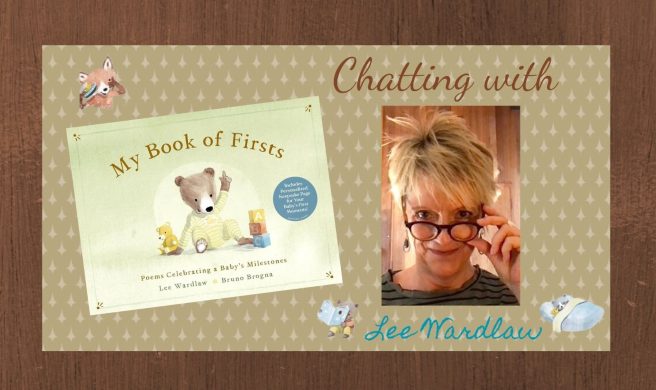
Today we’re excited to chat with award-winning author, poet and cat-wrangler Lee Wardlaw about My Book of Firsts: Poems Celebrating a Baby’s Milestones (Red Comet Press, 2025), illustrated by Bruno Brogna.
Though this is her first poetry collection, it’s not the first time Lee has visited us. She was one of our Potluck Poets back in 2012, the same year she won the Lee Bennett Hopkins Poetry Award for Won Ton: A Cat Tale Told in Haiku (Henry Holt, 2011). We loved her purrfect “Catku” and the recipe she shared for Kitty Litter Cake. Me-wow!
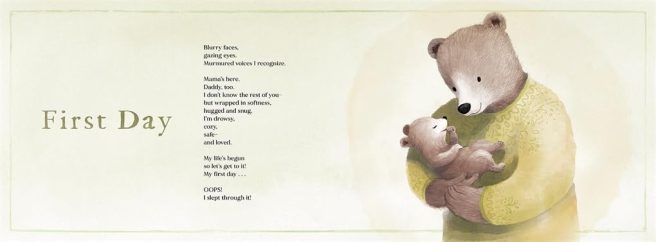
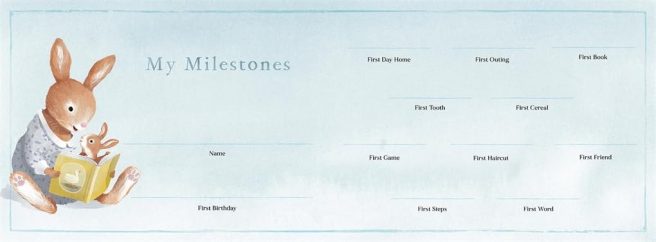
Because My Book of Firsts is written from a baby’s perspective, the poems are that much more endearing. This emotive hug of a book is a joy to read aloud with its playful, inventive rhymes, lively cadences, and rich vocabulary. Each precious milestone from baby’s first year is cause for wonder and celebration, whether a First Day, First Friend, First Outing, First Word or those magical First Steps — and Brogna’s adorable animal families add just the right touch of charm and tenderness.
With its padded cover and allotted pages for recording your own baby’s milestones, this delightful book is an appealing keepsake for new parents, making it the perfect baby shower or birthday gift that families will be proud to share.
We thank Lee for telling us more about her literary bundle of joy with wonderful personal photos and a yummy recipe. Enjoy!
Don’t you love it when a special book finds you just when you need it the most?
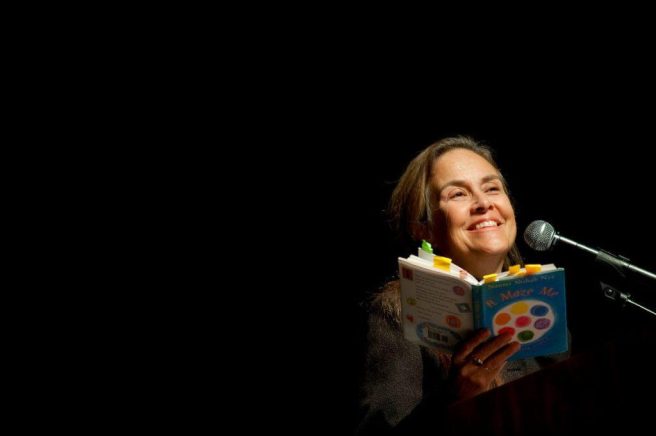
Recently Naomi Shihab Nye’s luminous collection, A Maze Me: Poems for Girls (Greenwillow, 2005), caught my attention while I was looking for poems about hope. I had shared “Sifter” here when Nye was first named Young People’s Poet Laureate back in 2019, but hadn’t read any other poems from the book.
Though I’m a longtime Nye fan, I somehow missed this one. Big mistake, huge oversight. Better late than never, but I truly wish I’d read this book 20 years ago.
Can’t remember the last time I was so moved, delighted, inspired, and yes, amazed by a collection of poems for tween girls. Nye actually had me at her Introduction, where she discusses her unsettling junior high years, a time when she was the only one among her friends who didn’t want to leave childhood behind for the grim restrictions of adulthood. She wanted to remain open, observant, impressionable, safe, “amazed forever.”
photo of Naomi Shihab Nye by Rajah Bose.
Her poems took me right back to my own tweenhood, a very odd, awkward experience where the only memories I have are of a favorite black velveteen skirt, the SRA Reading Lab (I was stuck at Green while my classmates zoomed up to Aqua), and slipping on a freshly mopped floor while being chased by my algebra teacher (whom I had teased). But I loved the Beatles, and that was enough for me.
Here are two of my favorite poems from A Maze Me: the first is about how small things can have a big impact; and the second describes the person I’m still striving to become.
Picture this: light rain and cloudy skies, then suddenly the sun breaks through. A rainbow! We’re surprised and delighted at this rare gift. Whether we then picture a pot of gold or dream of a once-in-a-lullaby land where bluebirds fly, it’s pure magic!
We’re probably most familiar with celestial rainbows, but they also appear in other shapes and forms in some unexpected places. These are gloriously celebrated in A Universe of Rainbows: Multicolored Poems for a Multicolored World (Eerdmans BFYR, 2025), a brand new anthology compiled by author-poet Matt Forrest Esenwine with illustrations by Jamey Christoph.
The book features 20 stellar poets, including many from our Poetry Friday community: Irene Latham, Amy Ludwig VanDerwater, Charles Waters, Laura Purdie Salas, Janet Wong, and Matt himself (who contributed five poems).
The 22 poems in the collection, written in a variety of poetic forms including free verse, haiku, and pantoum, are presented in five categories:
Rainbows of Light
Rainbow Waters
Living Rainbows
Rainbows of Rock
Rainbows Beyond
Each poem explores a distinct rainbow type and is accompanied by a scientific sidebar of fascinating tidbits. In Rainbows of Light, we see how a rainbow can transform cursed rain into a joyful surprise, and are playfully introduced to Sun Dogs and Pilot’s Glories, before becoming enchanted by a moonbow in southern Africa. We are then reminded of our ability to make our own rainbows with gems and crystals.
THE SATURDAY OF NO
by Nikki Grimes

Saturday morning raindrops
pelt the slate rooftop,
tap out a message
I don't want to hear:
No sunshine.
No clear blue.
No hopscotch.
No soccer.
No softball.
No skip rope.

Nope.

There goes my perfect day!
Bear-like, I growl about
the fun I'll miss.
My nose against
the windowpane,
I curse the rain,
then -- wait!
I catch the storm's apology:
sun-drenched strips of color
arch across the sky --

             A rainbow!
             Oh! My!
With Rainbow Waters, we are transported from two hot springs in Yellowstone National Park (the colors of the Morning Glory Pool and the Grand Prismatic Spring emanate from heat-loving bacteria living at different depths), to the Fly Geyser in Nevada (algae in the water flourishing in moist, hot environments colors the rocks), to the Caño Cristales in Colombia (“River of Five Colors” blooming with aquatic weeds). Amazing!
We don’t usually speak of poetry and comics in the same breath. We may like and enjoy both, but tend to approach each separately on its own terms. Purists may even consider poetry and comics to be on opposite ends of the literary spectrum (gasp!).
Yet Grant Snider sees things differently. The popular “Incidental Comics” creator was keen on finding a closer connection between poetry and comics, as both “contain condensed language, strong imagery, and ideally leave the reader with a new insight.”
Author-illustrator, cartoonist, comic strip writer and orthodontist Grant Snider lives with his wife and five childrenin Wichita, Kansas.
Targeted for middle grade readers, Snider’s fun and inventive collection demonstrates this perfectly with an entirely new way of approaching and appreciating poetry. Did you ever think it would be possible to read a poem in a series of comic panels? Me neither. 🙂
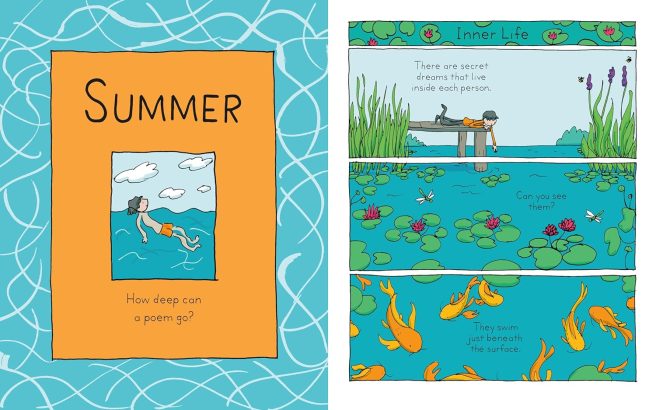
The poems in Poetry Comics (Chronicle Books, 2024) are organized by season, with each section offering insights into the poetry writing process. Title pages inspire and direct:
Spring: “I want to put down on paper the feeling of fresh possibilities.”
Summer: “How deep can a poem go?”
Fall: “I will wait for a poem to fall into my open arms.”
Winter: “A new page — my words huddle close to keep warm.”
Each season then ends with a variation of “How to Write a Poem.”
HOW TO WRITE A POEM #1

Find a quiet place.
A sharp pencil.
A blank page.
Sit still.
Keep quiet.
Wait.
A poem will rush in to fill the space.
Many of the poems are about nature (snails, tadpoles, butterflies, trees), while others examine universal human emotions and observations via kid-centric activities like running through sprinklers, waiting for the school bus, playing basketball, riding on roller coasters, climbing trees, reading good books, picking the perfect pumpkin, playing in the snow. Each poem is a sensorial impression of the here and now.





 Jama's Alphabet Soup