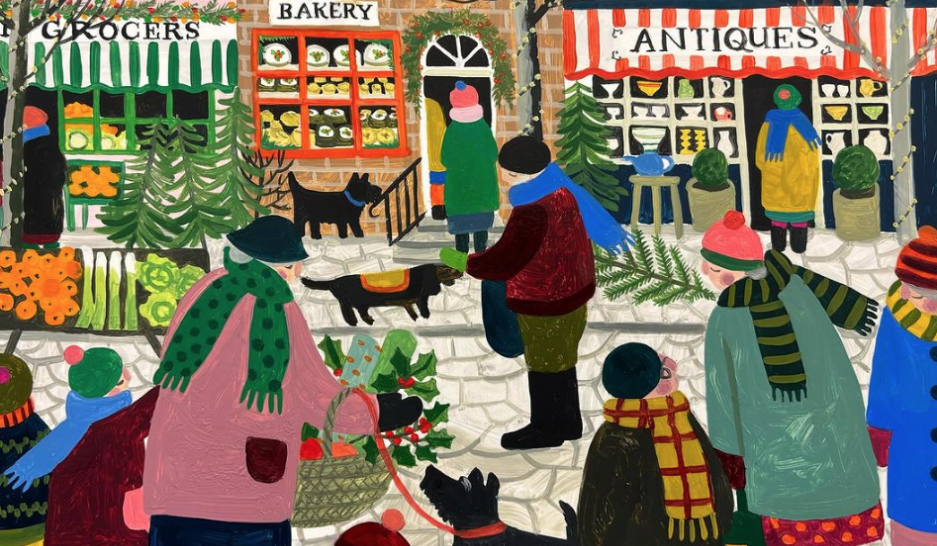
“I believe in poetry as a way of surviving the emotional chaos, spiritual confusions, and traumatic events that come with being alive.” ~ Gregory Orr
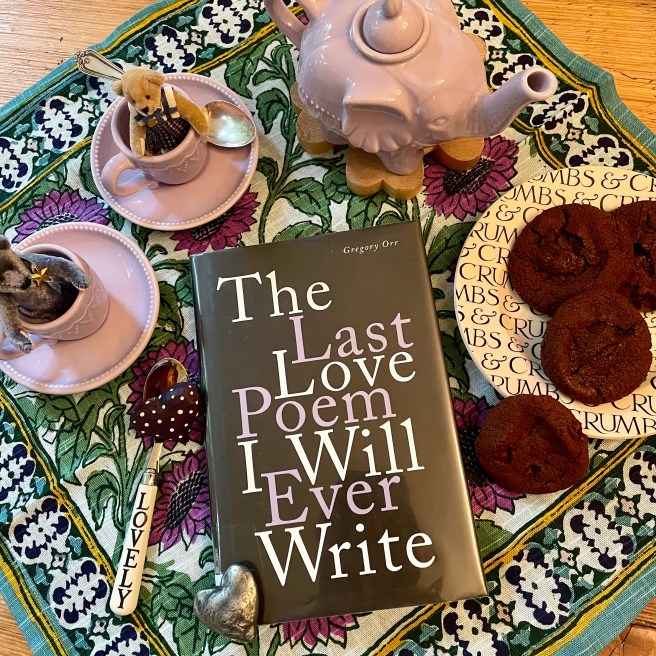
I’ve always enjoyed reading poems about poetry — how it’s defined, what it means to both poet and audience, how it shapes our thinking and mines emotional depths, the vast potential of its reach.
Virginia-based lyric poet Gregory Orr is a particular favorite, and today I’m happy to share two poems from his twelfth collection, The Last Love Poem I Will Ever Write (W.W. Norton & Co., 2019). I think you will like these ‘poems about poems’, marveling at how Orr celebrates the transformative power of language.
*

CERTAIN POEMS OFFER ME . . .

Certain poems offer me escape --
They're floating islands
Anchored only
By a cloud-rope of words
I can climb.

                      Some
Are the opposite:
Insisting on
Embodiment --
As if they were tattooed
On the beloved's thigh.

Still others are short
And sharp -- arrows
Aimed at the heart,
As if the purpose
Of beauty
Was to hurt me more alive.
*
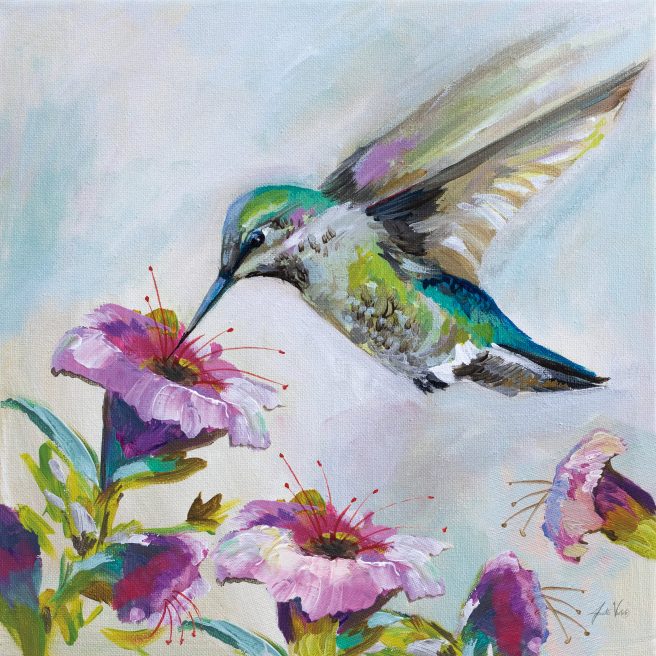
THE LAST LOVE POEM I WILL EVER WRITE . . .

Will contain an invention for turning ants' tears
Into hummingbird wings. It will hold every
Elegy the night sky ever wrote for the moon.
It will reveal the answer to the question "Yes."

It will feature a rosebush that grew naturally
Into the shape of a woman, a man, and a dog.
It will contain all our sorrow and some of our joy.

It will exhibit glass slippers worn by the last queen of mice
And also the invisible cathedral built on the spot where we met.
It will display a tree whose leaves change color
With the weather, turning bright blue at forty degrees.

It will contain a replica of the ice ship that sails
Through dreams, searching for survivors.
It will contain all our joy and some of our sorrow.

*
“As if the purpose/of beauty/Was to hurt me more alive.” Wow. Those words took me by surprise in such a profound way. It was something I knew, deep down, to be true, but could never quite articulate. Even now, every time I get to the end of that poem, those lines have the same impact.
This theme of pain ←→ pleasure also applies to the second poem, which suggests that in life, joy and sorrow not only coexist, but define each other. Don’t you love Orr’s elegant diction and whimsical details (“ants’ tears,” “glass slippers worn by the last queen of mice”), how those very personal flights of fancy strike a universal chord? A master lyricist!
This is a love poem to a beloved, to the world, and to crafting words that can encompass the extraordinary human capacity to love.
Consider that when Orr was just twelve, he was responsible for his younger brother’s death in a hunting accident. His world and belief system totally collapsed; he was understandably traumatized, desolate, and grief-stricken. He also found himself isolated, since no one in his family could speak to him about the tragedy. What was he to do with all that internalized agony?
In his essay, “The Making of Poems,” Orr describes how poetry helped him find meaning in life again.
As a young person, I found something to set against my growing sense of isolation and numbness: the making of poems.
When I write a poem, I process experience. I take what’s inside me — the raw, chaotic material of feeling or memory — and translate it into words and then shape those words into the rhythmical language we call a poem. This process brings me a kind of wild joy. Before I was powerless and passive in the face of my confusion, but now I am active: the powerful shaper of my experience. I am transforming it into a lucid meaning.
Because poems are meanings, even the saddest poem I write is proof that I want to survive. And therefore it represents an affirmation of life in all its complexities and contradictions.
This is a wonderful description of what lyric poetry can do. Like an ancient song, it has a kind of magic to it. Through the voice of the individual self, it validates human emotion as a worthy subject for exploration, expression, and celebration.
In an interview with Krista Tippett, Orr further discusses poetry’s unique role:
But what seems, to me, the reason — what’s so beautiful about lyric poetry is that what it does is, we ordinary people, in our daily lives, we experience enormous amounts of disorder and confusion. It’s inside us. It’s in our past. It’s in the unknowable future. So disorder is a part of our life. We all know that. We also know that we need order, that some kind of patterns reassure us: the sun rising, the stars and the moon, the seasons, our personal habits, which I love, the habit that reassures us about the world. And we just navigate our lives with this kind of interplay of disorder and order.
But a person in crisis, an individual in crisis, is someone who has been bowled over by some kind of crisis. And what poetry says to us is, Turn your confusion, turn your world into words. Take it outside yourself into language. Poetry says, I’m going to meet you halfway. You just bring me your chaos. I’ll bring you all sorts of ordering principles.
Comfort, consolation, order from chaos. The poems I shared today, with their subtle subtexts of sorrow, are in fact celebratory, evidence that Orr is a true survivor eager to show how making poetry has transformed his psyche. A poet’s wild joy shared with an audience. Poetry, then, is ultimately an act of love. What could be better than that?
*
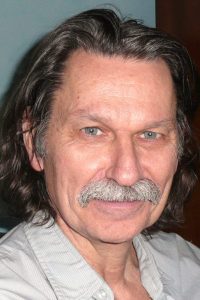
Gregory Orr is the author of thirteen collections of poetry, most recently Selected Books of the Beloved (Copper Canyon Press, 2022), and The Last Love Poem I Will Ever Write (Norton, 2019). Milkweed Editions recently reissued his memoir, The Blessing (2019). His prose books include A Primer for Poets and Readers of Poetry (Norton, 2018) and Poetry as Survival (University of Georgia Press, 2002). At the Dodge Poetry Festival in 2018, he premiered a fifty-minute song/poem cycle, “The Beloved,” with the Parkington Sisters. He’s been interviewed by Krista Tippett for her “On Being” series, by PBS NewsHour, and by NPR’s “This I Believe” series. Orr has published op-ed pieces in The New York Times on gun violence, trauma, and his experiences as a volunteer in the civil rights movement in the sixties. He has received fellowships from the Guggenheim Foundation and the National Endowment for the Arts, and an Award in Literature from the American Academy of Arts and Letters. Professor Emeritus at the University of Virginia, Orr taught there from 1975–2019 and was founder and first director of its MFA Program in Writing. He lives with his wife, the painter Trisha Orr, in Charlottesville, Virginia.
*
Enjoy this video featuring Orr at his home in Charlottesville, Virginia. Although it’s from awhile ago, it’s interesting to see his writer’s cottage and hear about how he started writing poetry after his brother’s death.
*
The exceedingly clever coffee aficionado Karen Edmisten is hosting the Roundup at her blog. Be sure to check out the full menu of poetic goodness being served up around the blogosphere this week. Have a nice Veteran’s Day weekend!
*Copyright © 2023 Jama Rattigan of Jama’s Alphabet Soup. All rights reserved.
 Jama's Alphabet Soup
More times than not, Jama, I think you have created a post especially for me. How do you do that? There are many connections for me in this post. Thank you so much. I now need to read much more of Orr’s work.
LikeLiked by 1 person
Your words will form my day today, Jama, and with Gregory Orr’s words accompanying me. “If we’re not supposed to dance, why all this music?” Each part feels as if I want to share with every person who feels apart, heartbroken in some way, hoping that Orr’s poems & the way the writing helped him would help them. Have a wonderful Friday & weekend finding your own music!
LikeLiked by 1 person
Orr is a masterful poet! So full of lyrical beauty and poignancy. I have all of his books; his memoirs are devastating and gorgeous. Thank you for this post Jama!
LikeLiked by 1 person
This is just what I needed today. Thank you. Like Linda, I’ll be reading more of Orr’s work. He resonates.
LikeLiked by 1 person
Exceptional post, Jama. Can I just say … you should open a tea-time museum with all of your beautiful tea displays! I will be first in line. I adored “The Last Love Poem I Will Ever Write.” I had to read it several times. Wonderful!
LikeLiked by 1 person
All of our joy, and some of our sorrow…
Wow. I hadn’t run across this poet though I am a On Being regular. I’m so glad I have a lot of his work to dig through. Thanks for sharing!
LikeLiked by 1 person
Your posts are always so full, Jama, and offer so much to think about. I now want to read more of Gregory Orr’s work. I especially liked your final thought: “Poetry, then, is ultimately an act of love. What could be better than that?” Thanks for sharing.
LikeLiked by 1 person
I’m familiar with some of Orr’s work–and have even read one of his craft books. But I had no idea he lived so close by. And now I want to go and listen to his On Being interview. I love that podcast.
LikeLiked by 1 person
This post is a rich well to go back to again and again. Thank you for sharing these bits of Orr’s work and story – I’m with Rose re. your concluding thoughts! Thank you. xo
LikeLiked by 1 person
I need more Orr in my life. Thank you, Jama.
LikeLiked by 1 person
I love that cloud-rope of words. Thank you!
LikeLiked by 1 person
Oh, Jama, this post bowled me over. The lines you highlighted walloped me too. Loved this too:
“And what poetry says to us is, Turn your confusion, turn your world into words. Take it outside yourself into language. Poetry says, I’m going to meet you halfway. You just bring me your chaos. I’ll bring you all sorts of ordering principles.”
I really need to listen to Orr’s full “On Being” episode. Thank you for this! I need it today!
LikeLiked by 1 person
Jama, thank you for this. I met Gregory Orr today through your post. I was just reading more of the powerful poems on my library app. His hope after what happened to him with his brother gives hope to us all. Thank you.
LikeLike
So much wonder here, and I love that “Floating Book Island with Waterfall” and hummingbird, thanks!
LikeLiked by 1 person