
“You will be pleased to know I stand obediently for the national anthem, though of course I would defend your right to remain seated should you so decide.” ~ Ira Glasser
A NEW NATIONAL ANTHEM
by Ada Limón

The truth is, I’ve never cared for the National
Anthem. If you think about it, it’s not a good
song. Too high for most of us with “the rockets
red glare” and then there are the bombs.
(Always, always, there is war and bombs.)
Once, I sang it at homecoming and threw
even the tenacious high school band off key.
But the song didn’t mean anything, just a call
to the field, something to get through before
the pummeling of youth. And what of the stanzas
we never sing, the third that mentions “no refuge
could save the hireling and the slave”? Perhaps,
the truth is, every song of this country
has an unsung third stanza, something brutal
snaking underneath us as we blindly sing
the high notes with a beer sloshing in the stands
hoping our team wins. Don’t get me wrong, I do
like the flag, how it undulates in the wind
like water, elemental, and best when it’s humbled,
brought to its knees, clung to by someone who
has lost everything, when it’s not a weapon,
when it flickers, when it folds up so perfectly
you can keep it until it’s needed, until you can
love it again, until the song in your mouth feels
like sustenance, a song where the notes are sung
by even the ageless woods, the short-grass plains,
the Red River Gorge, the fistful of land left
unpoisoned, that song that’s our birthright,
that’s sung in silence when it’s too hard to go on,
that sounds like someone’s rough fingers weaving
into another’s, that sounds like a match being lit
in an endless cave, the song that says my bones
are your bones, and your bones are my bones,
and isn’t that enough?

~ from The Carrying (Milkweed Editions, 2018).
*
Limón’s poem is especially relevant right now, not only because we are a country in crisis, but because 211 years ago, on September 14, 1814, American lawyer Francis Scott Key wrote his poem, “Defence of Fort M’Henry,” which became the lyrics for our national anthem.
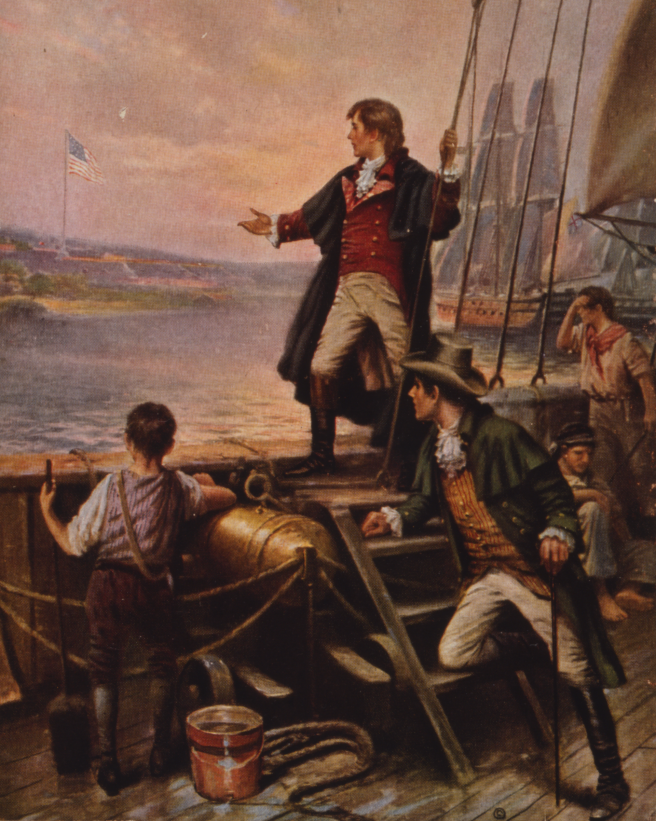
Set to the tune of a popular British song by John Stafford Smith, “The Star-Spangled Banner” was inspired by Key having witnessed the British bombardment of Fort McHenry in Baltimore Harbor. During “The Battle of Baltimore,” British warships pounded the fort with shells and rockets for a straight 25 hours. Because of the large scale of the attack, Key was certain the British would win, but when the smoke began to clear “in dawn’s early light,” he saw the large American flag flying over the fort, signaling victory.
Must confess I didn’t realize the national anthem actually has four stanzas — singing just the first one is hard enough! Even professional singers find it daunting to stand on an athletic field and belt out those high notes.
Like you, I must have learned the song in grade school, but I can’t remember when or how long it took me to memorize all the words. Other songs — “America the Beautiful,” “God Bless America,” “My Country ‘Tis of Thee” — have always given me more pleasant vibes, and they’re much easier to sing.
This part of Limón’s poem especially stings:
. . . Perhaps,
the truth is, every song of this country
has an unsung third stanza, something brutal
snaking underneath us as we blindly sing
the high notes with a beer sloshing in the stands
hoping our team wins.
So true, but instead of “something brutal snaking underneath,” it’s now operating in plain sight. The underbelly of America has its reins on the government, bringing to bear hate, racism, misogyny, greed, corruption, fascism, and disregard for the rule of law.
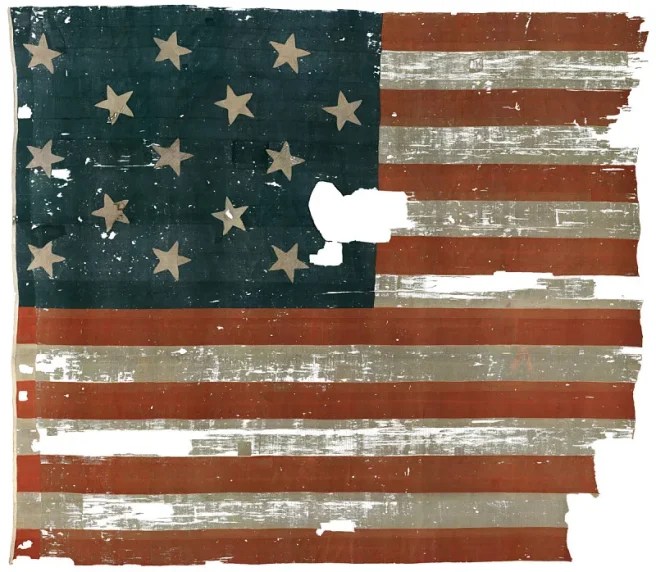
“The Star-Spangled Banner” is supposed to be a unifying song of national pride and identity, a rousing affirmation of our devotion to the ideals of freedom, liberty, equality, and justice. All four stanzas end with the words, “O’er the land of the free and the home of the brave.” Back in 1814, Key was profoundly moved by the courage shown by those fighting for America’s freedom. Now the majority party in Congress is full of kowtowing, self-serving cowards, not a brave one in sight. How dare they sing about “the land of the free” when their cult leader deports innocent citizens and muzzles the free press?
In recent years, of course, the national anthem has invited controversy, with some refusing to sing along or stand for it at public events as a form of protest. The prickly third stanza has even been deemed racist. Just this year, due to the current President’s pro-annexation rhetoric, Canadian crowds booed when the anthem was played at sporting events featuring the U.S.
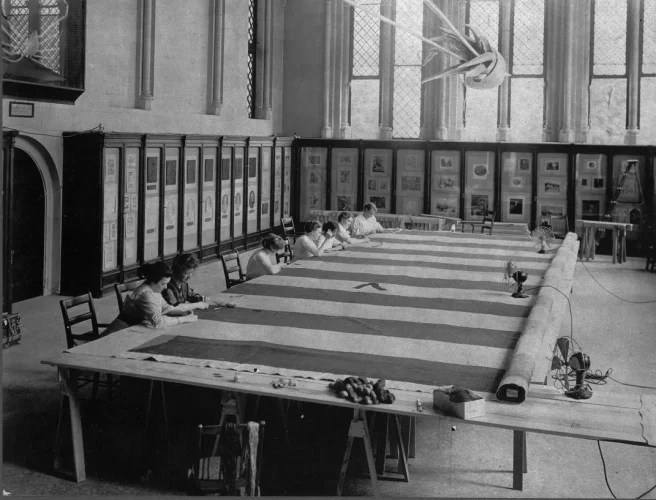
I do remember a time when hearing “The Star-Spangled Banner” made me feel patriotic and immensely proud to be an American. Key’s poem celebrated the defeat of a foreign enemy, but now our greatest enemy lies within.
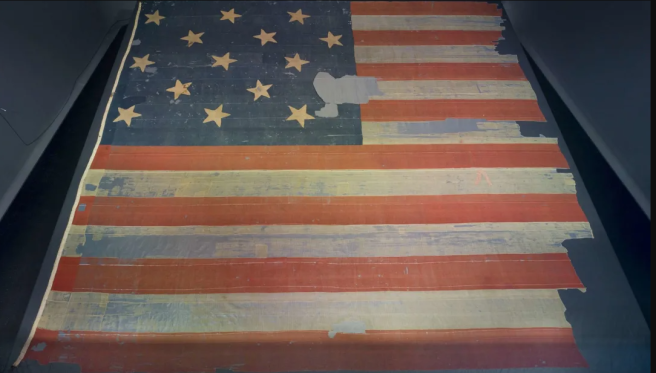
Do you think there’ll ever come a time when “the song in your mouth feels like sustenance, a song where the notes are sung by even the ageless woods, the short-grass plains, the Red River Gorge, the fistful of land left unpoisoned, that song that’s our birthright, that’s sung in silence when it’s too hard to go on, that sounds like someone’s rough fingers weaving into another’s, that sounds like a match being lit in an endless cave, the song that says my bones are your bones, and your bones are my bones . . . “?
Here’s our national anthem in its entirety:
THE STAR-SPANGLED BANNER
by Francis Scott Key
O say, can you see, by the dawn's early light,
What so proudly we hailed at the twilight's last gleaming?
Whose broad stripes and bright stars through the perilous fight,
O'er the ramparts we watched, were so gallantly streaming?
And the rockets' red glare, the bombs bursting in air,
Gave proof through the night that our flag was still there;
O say does that star-spangled banner yet wave,
O'er the land of the free and the home of the brave?
On the shore dimly seen through the mists of the deep,
Where the foe's haughty host in dread silence reposes,
What is that which the breeze, o'er the towering steep,
As it fitfully blows, half conceals, half discloses?
Now it catches the gleam of the morning's first beam,
In full glory reflected now shines on the stream:
'Tis the star-spangled banner, O long may it wave
O'er the land of the free and the home of the brave.
And where is that band who so vauntingly swore
That the havoc of war and the battle's confusion,
A home and a country should leave us no more?
Their blood has washed out their foul footsteps' pollution.
No refuge could save the hireling and slave,
From the terror of flight, or the gloom of the grave:
And the star-spangled banner in triumph doth wave,
O'er the land of the free and the home of the brave.
O thus be it ever, when freemen shall stand,
Between their loved home and the war's desolation,
Blessed with vict'ry and peace, may the heav'n rescued land,
Praise the power that hath made and preserved us a nation!
Then conquer we must, when our cause it is just,
And this be our motto: "In God is our trust."
And the star-spangled banner in triumph shall wave,
O'er the land of the free and the home of the brave!
*
Enjoy this performance by 10-year-old Jadon Perez at the Arians Family Foundation Golf Tournament (2021). Listening to it made me sad for what America has become, but Jadon gives me hope for the future. I just wish we had a President all kids could look up to.
*

Lovely and talented Rose Cappelli is hosting the Roundup at Imagine the Possibilities. Zip on over to check out the full menu of poetic goodness being served up around the blogosphere this week. Have a good weekend!
*Copyright © 2025 Jama Rattigan of Jama’s Alphabet Soup. All rights reserved.
 Jama's Alphabet Soup
Thanks for this, Jama. Ada Limon’s poem is beautiful– how nourishing to have a song for healthy lands and holding hands. The other day when I was holding a sign that read “Science makes America great,” someone asked me how much I was being paid. Why would I need to be paid for that? What a world.
LikeLiked by 2 people
It’s baffling, isn’t it? Crazy mentality.
LikeLike
Thank you for this, Jama. Your post is informative, reflective and hopeful. I share in your thoughts of the enemy within and your wishes for a better tomorrow.
LikeLiked by 1 person
We can’t give up hope no matter what.
LikeLike
It is indeed a trying time… I have taken a personal vow to not engage in discussions of politics and religion…I focus on the wonder of our universe and it’s complicated people…as citizens of this nation at this tumultuous time with questionable leadership it is important to focus on instilling free thinking and curiosity in the generations behind us….keeping the wolf at bay in our own families, neighborhoods and communities…
I ♥️America…. And know: This too shall pass…
LikeLiked by 1 person
Agree. We have to do what we can, where we can.
LikeLike
It breaks me that our flag has become a symbol of weaponized power. But more, the violence of our disunity is breaking our country. Pray that our poets will lift up the peaceable kingdom that lies at our horizon.
LikeLiked by 1 person
We need a poet for President! I also believe if there were more women in positions of power we’d have a better chance at peace.
LikeLike
It breaks me that our flag has been weaponized for power to silence the voices of peace and hope. Now more than ever we need poets to lift up the peaceable kingdom that lies at the horizon.
LikeLiked by 1 person
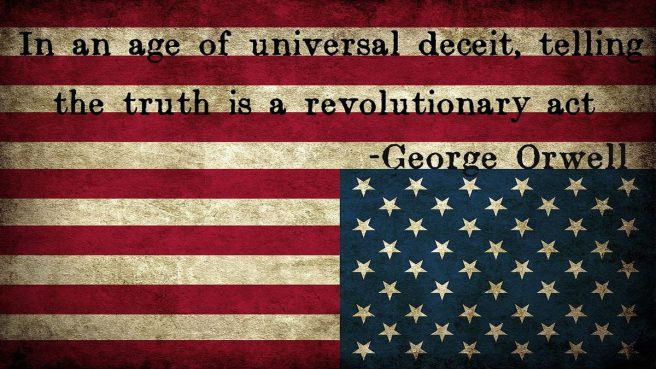
Thanks Jama for this powerful post and sadly strong Orwelll words. ❤️🩹🌻🦋
LikeLiked by 1 person
I try to keep things as hopeful and apolitical as possible here, but sometimes . . .
LikeLiked by 1 person
Thank you, Jama, for sharing Ada Limón’s poem and adding your reflections. With yesterday’s anniversary of 9/11, I found myself thinking of the unity and support for ALL Americans in the aftermath and yearning for that coming together.
LikeLiked by 1 person
Thanks for reminding me of that — I don’t think I remember any other time when we were as united as a nation as post 9/11. Something about a foreign enemy brought us all together. But now, things are so much harder.
LikeLike
I had no idea there were four verses. Thank you for sharing them. I love reading your posts because I always learn something new!
LikeLiked by 1 person
Glad I’m not the only one who didn’t know about the four verses! I also didn’t realize the anthem lyrics were once a poem. Thanks for stopping by to read, Linda!
LikeLike
Baltimore, Maryland-area students like me were taught and memorized verses 1-2 & 4. I didn’t know about the third verse until I was an adult.
LikeLiked by 1 person
Interesting!! Too controversial for students to learn?
LikeLike
That’s my guess. Same with the verse from the (former) state song, “Maryland, My Maryland,” which references “the Northern scum.”
LikeLiked by 1 person
Oof! This is such a powerful post. Thank you, Jama, for sharing this Ada Limón poem and your reflections. Both will definitely stick with me. These lines also really struck me, “a callto the field, something to get through beforethe pummeling of youth.”
Oh, to have a flag that hasn’t been weaponized and a country that protects its young with all its might.
LikeLiked by 1 person
Yes, if only . . .
LikeLike
Oh, my goodness…so much to consider here. I have very mixed feelings these days. I want to reclaim the flag for the ideals I hold dear. I fear that it doesn’t right now. Thank you for Limon and all the historical photos to give this post its heft. This is a good one that I will return to. It’s a prompt for me.
LikeLiked by 1 person
Same here with the mixed feelings!
LikeLike
Mahalo nui loa, dear Jama, for this thoughtful post…On another note (pun intended!), I didn’t realize our two (Punahou-schooled) daughters hadn’t sung our national anthem until we moved to the Mainland just before their middle school years…What had they sung at school? “Hawai’i Pono’i”!
LikeLiked by 1 person
Now I’m thinking I might not have sung it before middle school either. Wish I could remember.
LikeLike
Thank you for this thoughtful post.
LikeLiked by 1 person
Thank you for reading!
LikeLike
Oh, Jama, I’m with you through and through.
LikeLiked by 1 person
Glad to hear it!! Thanks, Karen.
LikeLike
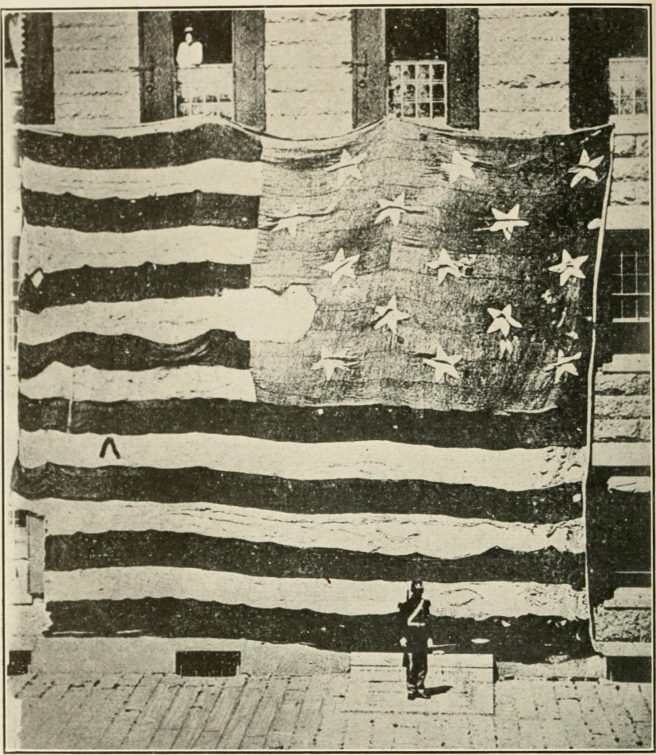
I’m with you too, Jama. Thank you for speaking truth this week. I also didn’t realize there were more verses to the anthem, and I didn’t realize that flag was as gigantic as it is. What a feat to sew! I wish Ada Limón’s words weren’t so stingingly relevant still, but of course, they are – “every song of this country/has an unsung third stanza” – and we should NEVER forget the stories of indigenous peoples and the multitudes brought here against their will, and how they all contributed to so much that we take for granted today. I too, long for leadership that young people can look up to, not those in power now who peddle fear. –Robyn
LikeLiked by 1 person
I was surprised too by how big that flag was! Too bad parts of it were cut off and given away. Wonder if anyone still has their piece. Relieved to hear another person hadnʻt heard about those 4 stanzas! Thought I was the only one. 🙂 It seems our divisions are growing even wider with the current regime in power. Weʻre definitely going backwards, like to Civil War days . . . thanks for commenting, Robyn!
LikeLike
Yes, the brutality is all out in the open and celebrated now. :>( Thanks, Jama, for sharing this powerful poem!
LikeLiked by 1 person
Corruption on a scale weʻve never before seen . . . and theyʻre getting away with it!
LikeLike
That Jaden brought forth the tears for me. I love Ada’s poem and how she makes us dig deep and think about the words that we sing (with a slosh of beer at a football game). When I look at what is happening to our democracy, I shiver at how those early soldiers had such high hopes and expectations. Thanks for this amazing post.
LikeLiked by 1 person
Yes, me too . . . itʻs sad that there are kids now who donʻt know what a morally decent President is like.
LikeLike
Powerful post & poem, Jama–thank you for sharing!!
LikeLike