
Happy National Apple Month!
Time to wrap your lips around apple pie, crumble, crisp, pandowdy, buckle, slump, cobbler and dumpling. Inhale the heavenly fragrance of cinnamon and nutmeg. Sip some warm cider. When it comes to apples, they can’t be beat for variety and versatility.
What’s your favorite type of apple? I’m partial to Red Delicious, Golden Delicious, and Granny Smith because they’re pretty much available year round. Have you ever wondered whether Granny Smith was a real person?
I recently found out in this crunchy picture book biography, Granny Smith Was Not An Apple: The Story of Orchardist Maria Ann Smith by Sarah Glenn Fortson and Kris Aro McLeod (Peter Pauper Press, 2023).
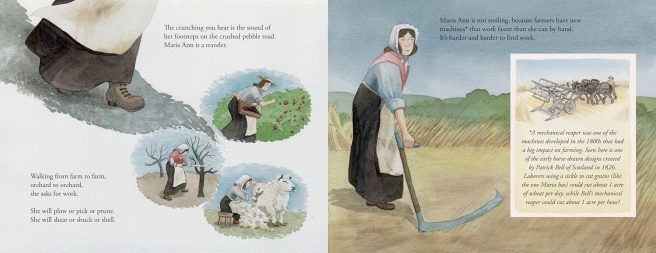
Back in the 1800’s, Maria Ann Smith, an English “tough to the core” itinerant worker and orchardist, struggled to find work when manual laborers were being replaced with faster, more efficient farm equipment.
Since she and her husband could barely support their family, Maria Ann helped deliver babies in her village (historically, midwives were called ‘Granny’). She received payment in the form of food and clothing, then eventually worked in an apple orchard, where she learned about grafting and harvesting.
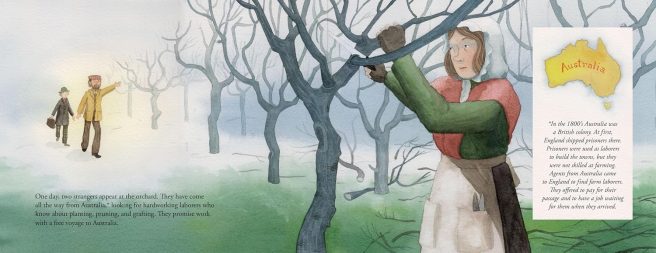
One day, two foreign agents arrived at the orchard looking for experienced laborers to work in Australia with a free voyage. Ignoring her neighbors’ warnings not to go, Maria and her family boarded the ship to Australia, enduring the arduous 4-month journey during which her five children fell ill. Maria kept her spirits up by thinking about a better life.
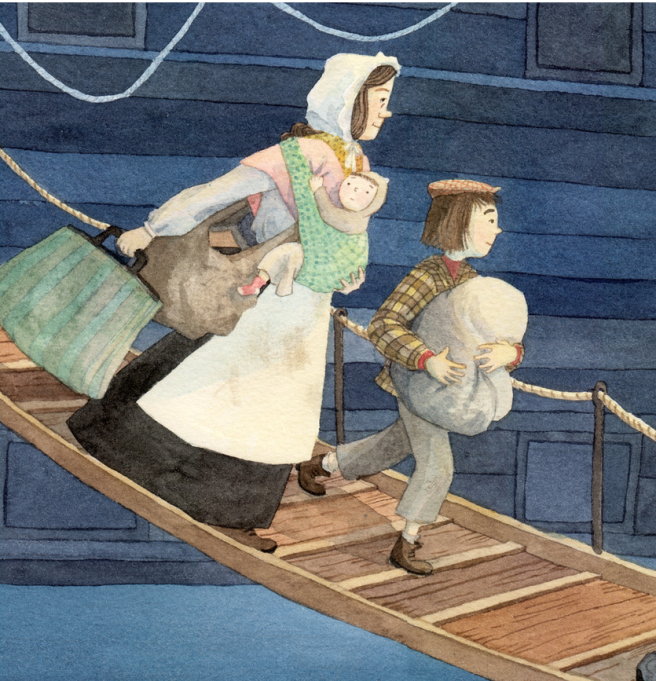
Once in Australia, Maria Ann worked long, hard hours at the orchard and continued as a midwife, scrimping and saving in hopes that she and her husband Thomas might some day build a home of their own.
Finally, in 1855-56, the Smiths purchased 24 acres of land in Ryde, Australia, where they not only built a house, but also planted their own apple orchard.
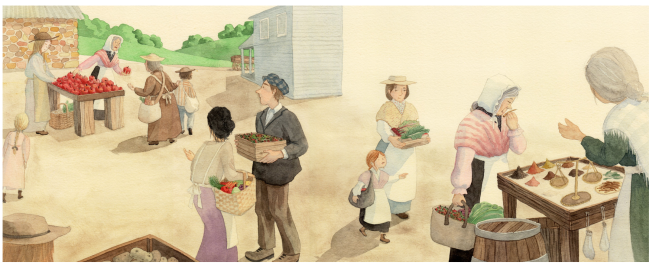
Years later when the orchard bore fruit, Maria’s red apples sold quickly at the market. Another vendor offered her a box of French crab apples from Tasmania, suggesting that she add a few to her apple pies “for a bit of tartness.”
After purchasing sugar, cinnamon and nutmeg, Maria baked her pies, then dumped the leftover red and crab apple cores and scraps onto a creek bank near the edge of her orchard.

As winter passed into spring, Maria noticed a seedling tree growing from the scrap pile. It had crab apple instead of red apple leaves. She then nurtured that seedling over several years, “watering and watching.” The tree blossomed, and a few years later, it bore green apples.

Maria waited awhile, assuming the green apples would turn red. She was disappointed when they stayed completely green. Curious, she peeled and sliced one of them. It tasted “like her pies, sweet, but tart.” Delicious!
She then asked two neighboring fruit growers to inspect her tree and its green apples. They confirmed it was indeed a new apple, “perfect and always green,” that had grown from her crab apple seedling. Early the following spring, she took cuttings from that tree and grafted them into new rootstocks. Before long, she had rows of thriving new trees, heavy with green apples.

Fortson’s succinct, engaging narrative weaves in essential details and portrays Maria Ann as practical, industrious and resourceful. I like how the author punctuated the text with three mentions of “crunching” to highlight the main parts of the story.
First, there’s the crunching sound of Maria’s “footsteps on the crushed pebble road” as she travels around England; second, the “sound of crunching pebbles” under the wagon wheels when the Smiths were picked up upon arriving in Australia; and third, the satisfying crunch of Maria Ann happily biting into one of her green apples — apples she alone gave to the world.
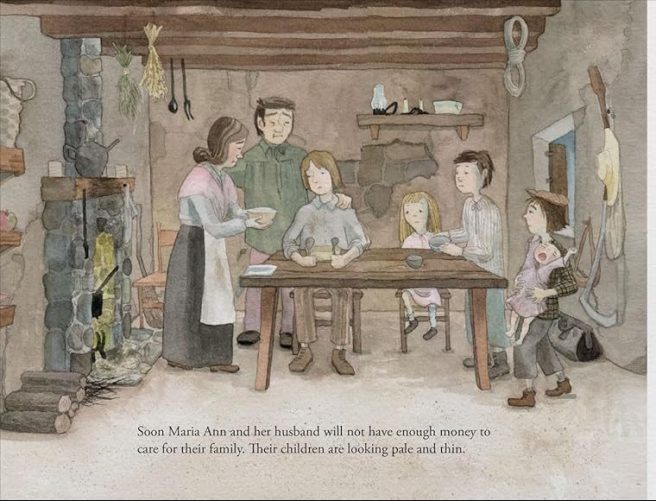
McLeod’s warm and soothing illustrations are rendered in soft earth tones — primarily green, of course — effectively depicting 19th century rural life. Kids will enjoy seeing the period clothing, stone cottages, fields, rolling hills, orchards, grafting process and changing landscape. They will begin to appreciate how much patience and attention was required as Maria cultivated her trees, waiting year after year for them to blossom and finally bear fruit.
Who could have ever imagined that the humble Granny Smith apple had such a fascinating backstory? A fluke of nature, a chance seedling and a woman who had the curiosity and foresight to propagate it. I had no idea Granny Smith apples originated in Australia, and it’s good to be reminded of the lasting rewards of persistence and hard work.

Illustrated text boxes sprinkled throughout the book offer interesting tidbits about farm equipment, Australia, grafting and pollination. Back matter includes a Timeline and an Endnote about the impact of British colonization on the indigenous population.
This crunchy blend of biography, history and orchard science is a juicy, satisfying bite for apple lovers of all ages. 🍏
*
🍏 SWEDISH APPLE PIE 🍏
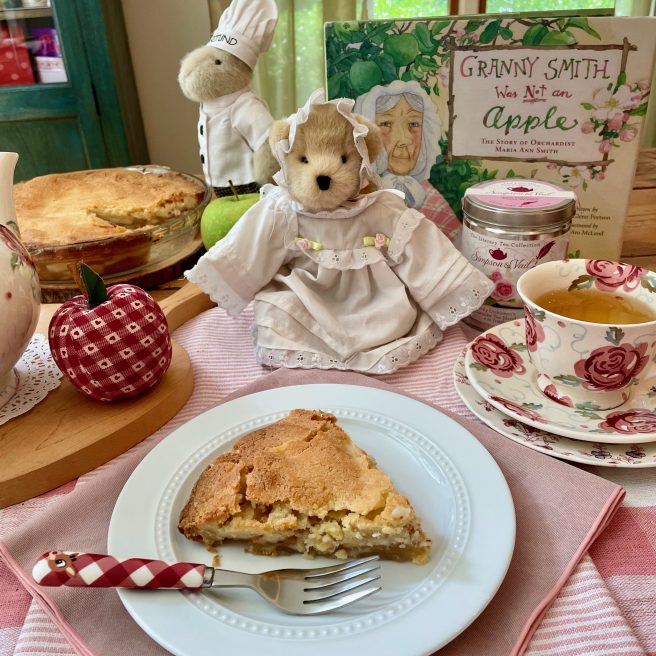
Naturally after reading this book we were anxious to make something using Granny Smith apples. I was happy to find yet another scrumptious recipe in Amy Traverso’s wonderful Apple Lover’s Cookbook (W.W. Norton, 2011).
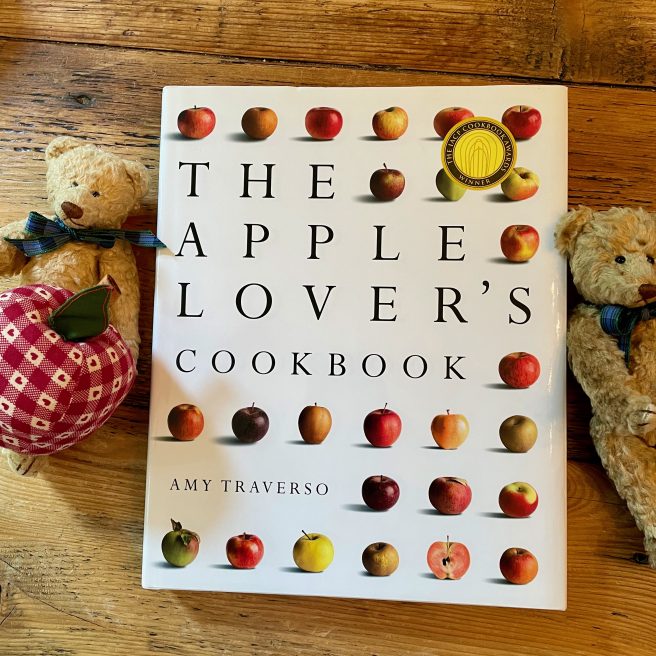
Truly, it is the only apple cookbook one would ever need. I can say without hesitation that every. single. recipe I have ever made from it has turned out great, from apple dumplings to apple brownies to sweet potato apple latkes. It’s become a fall tradition to try a new Amy recipe every year (in 2020 she published an updated/revised edition of the book).
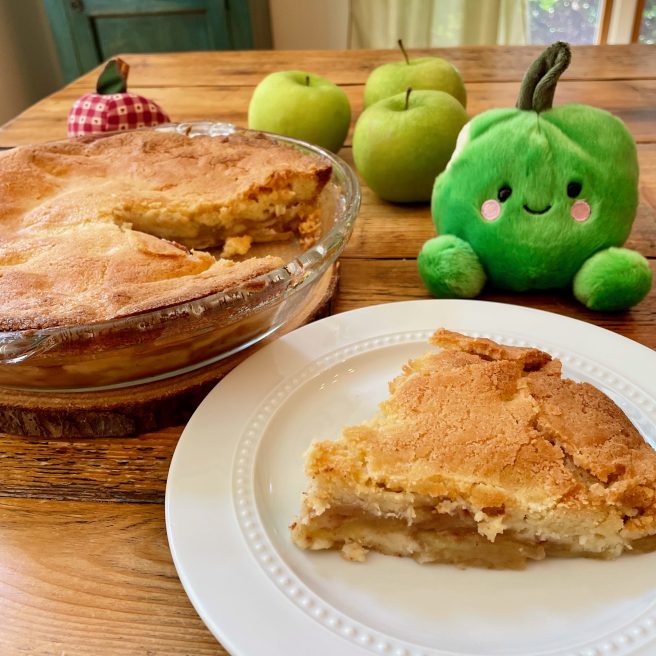
Anyway, a Swedish apple pie is a crustless pie that’s so easy to make — the perfect “starter” recipe for those who are intimidated by shortcrust pastry. All you have to do is peel, core and slice four apples (five if they’re small), toss with sugar, cinnamon and flour, then lay the slices in a 10″ deep dish pie plate.
You then make a simple batter consisting of butter, flour, sugar, and one egg, which you spread over the apples. The batter settles down around the fruit as it cooks, so you end up with slices of fruit suspended in a cake-like filling. It’s like a pie-cake hybrid of sorts; I like the crunchy-chewy texture of the buttery topping with those cinnamon-y apples. So yummy!

Granny Smith apples were perfect for this recipe since they hold their shape so well, and their tartness nicely complements the rich cake batter. I was surprised that even without a bottom crust, this pie could be neatly sliced for serving.


So, if you’re looking for an additional way to enjoy fall’s bounty of apple goodness, something other than the usual apple crisp, crumble, or cobbler, give this one a try! Thank you, Granny Smith!

Swedish Apple Pie
Ingredients
- 4 large firm-tart apples (about 2 pounds), peeled, cored, and cut into 1/4-inch thick slices
- 1 teaspoon cinnamon
- 1 tablespoon plus 1 cup all-purpose flour
- 2 tablespoons plus 1 cup granulated sugar
- 10 tablespoons (1-1/4 sticks) salted butter at room temperature, plus more for greasing pan
- 1 large egg
Directions
- Preheat oven to 375 degrees F. Grease a 10″ deep dish pie plate and set aside.
- In a medium bowl, toss the apple slices with the cinnamon, 1 tablespoon of flour, and 2 tablespoons of sugar. Arrange the slices flat and in an even layer in the pie plate (should be about 3/4 full).
- In a standing mixer or with a hand-held mixer, combine the remaining flour and sugar with the butter and egg. Mix until combined. Use a spatula to spread the batter over the apples. Bake until the top is golden brown and crusty, 40 to 45 minutes. Let cool on a rack for 30 minutes, then serve warm from the pan.

*

GRANNY SMITH WAS NOT AN APPLE: The Story of Orchardist Maria Ann Smith
written by Sarah Glenn Fortson
illustrated by Kris Aro McLeod
published by Peter Pauper Press, August 2023
Picture Book Biography for ages 4-7, 32 pp.
*Includes Timeline and Endnote for Parents, Caretakers and Educators
**Junior Library Guild Gold Standard Selection
🍏 Check out the Common Core Teaching Guide at the publisher’s website.
🍏 Enjoy the Official Book Trailer:
*

THE APPLE LOVER’S COOKBOOK: The Classic Guide to Cooking and Eating Apples (Revised and Updated)
by Amy Traverso
published by W.W. Norton & Co. (2020), 336 pp.
🍎 Other recipes from The Apple Lover’s Cookbook previously shared at Alphabet Soup:
- Apple Brownies
- Apple Pumpkin Walnut Muffins
- Apple Dumplings with Cider Rum Sauce
- Baked Apple French Toast with Hazelnut Crumb Topping
- Sweet Potato-Apple Latkes
- Baked Apple Oatmeal Pudding
- Lowfat Gingerbread Applesauce Cake
*Interior spreads text copyright © 2023 Sarah Glenn Fortson, illustrations © 2023 Kris Aro McLeod, published by Peter Pauper Press. All rights reserved.
**Copyright © 2024 Jama Rattigan of Jama’s Alphabet Soup. All rights reserved.
 Jama's Alphabet Soup
Another sweet/tart must get this book for my students. Thanks, Jama. I love learning history I didn’t already know…and especially about women leaders who just got the work done without a lot of fanfare. Beautiful story and illustrations. I will order this for my public library.
LikeLiked by 1 person
Yay!! You and your students will enjoy this one. I agree; it’s great reading about women with foresight who just got the job done. 🙂
LikeLike
This was delightfully crunchy, dear Jama! Thank you for enlightening and brightening our day! Aloha!
LikeLiked by 1 person
Happy to provide the crunch anytime. 🙂 Thanks for stopping by to read.
LikeLiked by 1 person
Looks like a good book about a good apple!
…And an interesting person.
LikeLiked by 1 person
I appreciate Granny Smith apples a lot more now. 🙂
LikeLike
Jama!
I can’t thank you enough. What you’ve done here is beautiful. You’ve taken so much time and care with your review. My heart is full.
With Gratitude,
Sarah Glenn Fortson
LikeLiked by 1 person
Glad you enjoyed the review, Sarah. Thank you so much for writing this fascinating book!!
LikeLike
It sounds like she was such a hard worker, keeping going through all the hard times. I love events/stories that seem serendipitous, and this is certainly one, but she had the smarts to recognize something new, too! Love the story, Jama, and thanks for the recipe! Apples, all kinds, fed me at lunch all my working years, mostly with crackers and/or rice cakes & peanut butter. I love apples, favorites are the Granny Smiths and Galas! A yummy post, with history is a good thing!
LikeLiked by 1 person
You’re right. A serendipitous event, but it’s important that she was there to recognize something new, and then asked for another opinion.
LikeLiked by 1 person
What an interesting story Jama. Our family has not gone apple picking for a couple of years now and I really miss the feel and smell of the Apple orchard. And I’m definitely going to try the Swedish apple pie recipe! Thank you again for a splendid blog!
LikeLiked by 1 person
Glad you found Smith’s story as interesting as I did. The recipe is very easy to make. I do remember seeing lots of pics of your family going apple picking.
LikeLike
This was so interesting! Our family has not gone apple picking for a couple of years, and I really miss the feel and smell of the orchards. I love the ritual of trying to find the prettiest and sometimes the biggest apple on the tree! I’ll never look at a granny Smith the same way again! And I will show off my new knowledge to the family ! I definitely will try the Swedish apple pie recipe. It sounds easy and yummy! Thank you so much for always brightening my day.
LikeLiked by 1 person
Hi everyone! I am a day late, but I am just as impressed as everyone else by this post. I never knew the story of the special way that Granny Smith apples came to be. However, for years their Lucious tartness has been a favorite of mine. My other two favorites are Macintosh and Cortland apples. Thanks for sharing recipes. It was great to learn the history behind this apple!
LikeLiked by 1 person
Len’s fave is McIntosh. I would never have guessed the first Granny Smiths were cultivated in Australia!
LikeLike
This book looks wonderful. What a fascinating story. I will have to check this one out. The Swedish apple pie looks delicious, and it sounds easy to make. I like that! Thanks for the recipe. I’m partial to Honey Crisp apples myself. Thanks for the post.
LikeLiked by 1 person
Oh yes, I like Honey Crisps too. They live up to their name. 🙂
LikeLike